


Come visit us at NRF2023 Jacob K. Javits Convention Center | New York City

Read More

Top Smart Retail Solutions for 2026 What to Look For?

In the rapidly evolving retail landscape, "smart retail solutions" are becoming essential. According to a recent report by McKinsey, investments in digital transformation are projected to exceed $1 trillion by 2026. These solutions are reshaping how retailers operate, making processes more efficient.

Smart retail solutions leverage technologies like AI, IoT, and big data analytics. These innovations help retailers personalize customer experiences and optimize inventory management. A report from Gartner predicts that by 2026, over 75% of retailers will use AI for customer interactions. This trend reflects a significant shift toward technology-driven engagement.

However, retailers face challenges when implementing these solutions. Budget constraints and lack of technical expertise can hinder progress. Moreover, not all technologies yield immediate results. Businesses must critically assess their needs and carefully select solutions. The future of retail depends on the thoughtful integration of smart retail solutions.
Top Smart Retail Solutions for 2026 What to Look For?

Emerging Technologies Shaping Smart Retail Solutions in 2026

As we approach 2026, smart retail solutions are evolving rapidly. Emerging technologies such as AI, augmented reality (AR), and the Internet of Things (IoT) will significantly shape the retail landscape. According to a recent report by the National Retail Federation, a staggering 70% of retailers plan to invest in AI within the next two years. This technology empowers businesses to analyze customer behavior, tailor shopping experiences, and optimize supply chains.

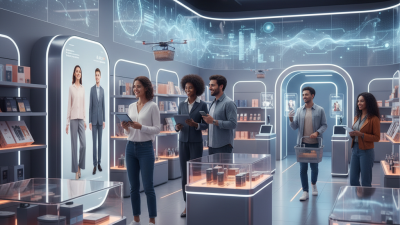
Additionally, IoT technology is becoming essential for inventory management. Smart shelves equipped with sensors can monitor stock levels in real-time. This can reduce waste and improve efficiency. A report from Deloitte highlights that retailers utilizing IoT solutions can expect to see an average revenue increase of 15%. However, with the integration of these technologies, challenges arise as well. Security concerns must be addressed, as data breaches can undermine customer trust.

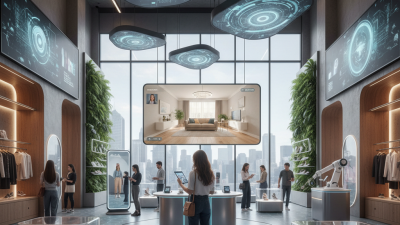
AR is another game-changer. It provides immersive shopping experiences, allowing customers to visualize products before purchase. A survey by Accenture indicates that 40% of consumers would be more likely to shop if they could use AR to see how products fit in their surroundings. Yet, the cost of implementing these technologies can be high, leaving many businesses hesitant. Balancing innovation with investment remains a critical challenge for retailers gearing up for 2026.
Key Features to Look for in Smart Retail Platforms

Top Smart Retail Solutions for 2026 What to Look For?

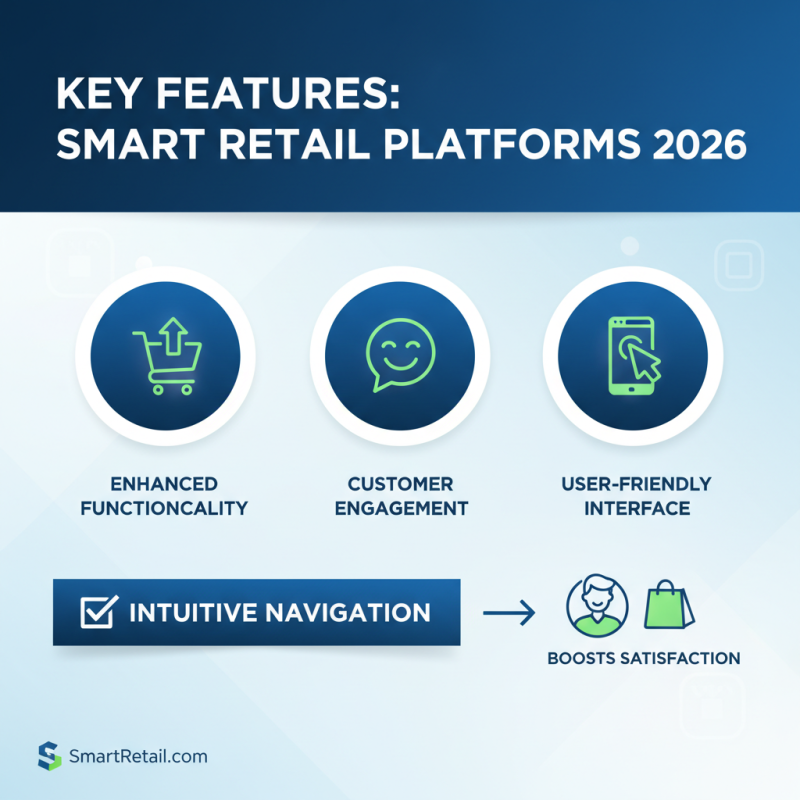
The rise of smart retail solutions has transformed the shopping experience. When evaluating smart retail platforms for 2026, consider key features that enhance functionality and customer engagement. User-friendly interfaces are essential. Shoppers need intuitive navigation. This minimizes frustration and boosts satisfaction.

Data analytics capabilities also play a critical role. Retailers must analyze shopping patterns. Insights can drive tailored promotions. Effective inventory management helps in maintaining stock levels. Real-time updates prevent stockouts and overstock situations. These elements make operations more efficient, though they require accurate data collection.

Finally, security features are vital. Protecting customer information is non-negotiable. A breach can damage trust irreparably. Automation and AI-driven solutions also deserve attention. They improve personalized experiences but can seem impersonal at times. Balancing technology with human touch is a challenge worth contemplating. Embracing these features can lead to a more successful retail environment.

Integration of AI and Machine Learning in Retail Solutions

The integration of AI and machine learning in retail solutions is transforming the industry. According to a recent report by McKinsey, AI-enabled solutions can enhance customer experience, driving sales by over 30%. Retailers are increasingly using AI algorithms to analyze consumer data. This results in personalized promotions and tailored shopping experiences.

Machine learning tools are vital for inventory management. They predict stock requirements efficiently, reducing excess inventory by 25%. Smaller retailers benefit significantly from such insights. They can compete by optimizing their supply chains. However, many still struggle to implement these technologies effectively. A survey revealed that 45% of retailers lack the skills to leverage AI fully.

Moreover, AI-driven chatbots are becoming commonplace. They improve customer service while minimizing operational costs. Yet, many consumers feel frustrated by their limitations. In fact, about 30% of shoppers prefer human interaction over bot responses. This highlights a gap. Retailers must balance automation with the human touch. Addressing these challenges will be crucial as retail advances toward 2026.

Enhancing Customer Experience through Smart Retail Innovations

In 2026, smart retail innovations will significantly reshape the shopping experience. These solutions should prioritize customer engagement. Interactive displays will draw customers in, offering personalized product suggestions. Enhanced mobile apps will facilitate seamless navigation within stores, ensuring ease of access to desired items.

Moreover, data analytics will play a crucial role in understanding consumer behavior. Retailers will need to focus on gathering insights to improve inventory management. However, the challenge lies in maintaining customer privacy while collecting this data. Poor handling of personal information can lead to a loss of trust.

Augmented reality (AR) will offer immersive shopping experiences, letting customers visualize products in real life. Yet, not all customers may feel comfortable using such tech. Striking a balance between digital engagement and genuine human interaction is vital. Embracing these smart retail solutions may enhance experiences but requires constant adaptation and reflection to meet evolving customer expectations.

Sustainability Trends in Smart Retail for the Future

Top Smart Retail Solutions for 2026 What to Look For?

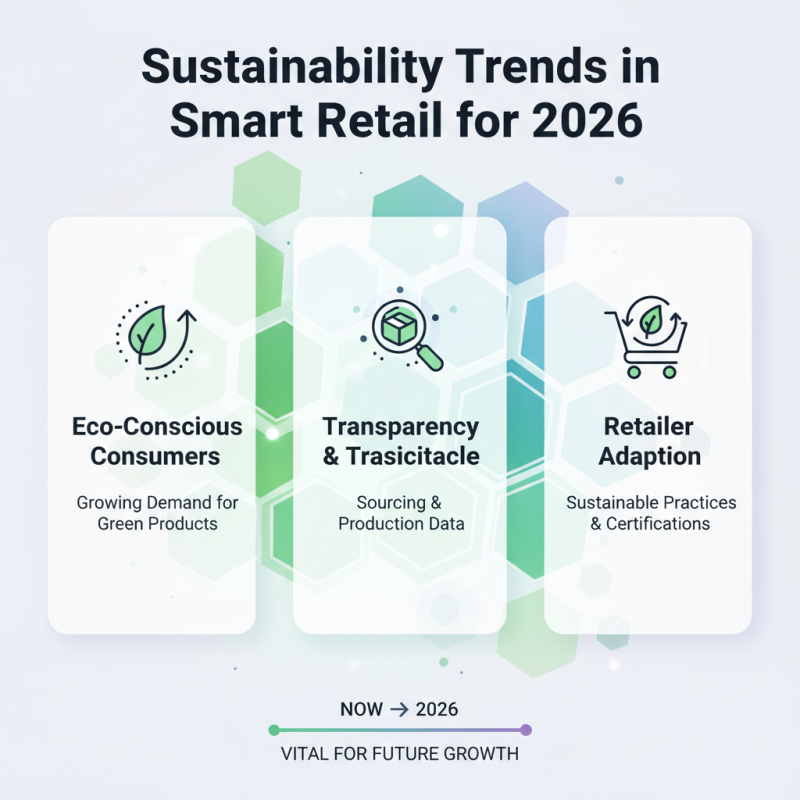
Sustainability is becoming vital in smart retail. As we approach 2026, this trend will only grow. Customers are increasingly eco-conscious. They demand transparency in sourcing and production. Retailers must adopt sustainable practices to attract these consumers.

Adopting energy-efficient technology is crucial. Smart lighting and HVAC systems can significantly reduce energy usage. Integrate renewable energy sources where possible. Customers appreciate brands that invest in green solutions.

Another important aspect is sustainable packaging. Biodegradable materials are gaining popularity. Reducing waste in packaging can enhance brand image. Retailers should also encourage customers to recycle packaging.

Tips: Implementing a rewards program for returning packaging can foster loyalty. Share your sustainability goals with consumers. Create a clear timeline to showcase progress. Transparency builds trust, an essential part of the modern retail experience.