2026 Top PU Foam Sealant Types for Global Buyers
Choosing the right PU foam sealant in 2026 requires more than comparing expansion rates or advertised prices. Global buyers must consider application, climate, packaging, curing behavior, and long-term compatibility.
A professional installer may use gun-grade foam around window frames, while a homeowner may prefer a straw-applied can for small repairs. Low-expansion formulas can reduce pressure around delicate frames. High-expansion products can fill larger cavities faster, but they demand careful control. Fire-rated, flexible, winter-grade, and low-emission types serve different project conditions. Small details matter.
They really do.
In practical sourcing work, technical data sheets often reveal more than product labels. Buyers should check density, yield, curing time, adhesion, storage temperature, and shelf life. They should also request safety data sheets and independent performance evidence when projects involve insulation, doors, windows, or building-envelope systems. Requirements may differ between regions, so compliance claims need verification before purchase. A product suitable for a dry European warehouse may behave poorly on a humid tropical jobsite. Temperature changes can also affect output and curing.
There is no universal best PU foam sealant. That conclusion sounds simple, perhaps too simple, because real installations expose hidden assumptions. Experienced buyers compare supplier consistency, batch control, technical support, and packaging quality alongside price. They also test samples under realistic conditions before approving large orders. This guide examines the leading PU foam sealant types for global buyers, with practical attention to performance, risk, application, and value.
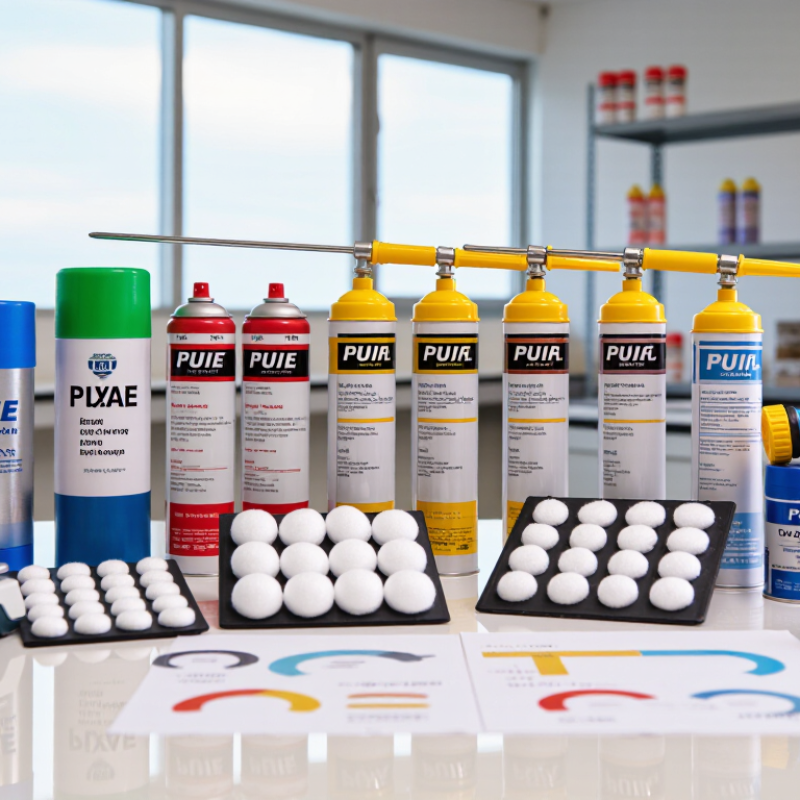
PU Foam Sealant Chemistry: 1K Moisture-Cure vs 2K Reactive Systems
For 2026 global buyers, PU foam sealant chemistry matters more than container size. One-component, or 1K, foam cures through moisture in air and substrates. It is practical for window gaps, door frames, and service penetrations. However, dry interiors can slow curing. Cold conditions may also reduce expansion and skin formation.
Two-component, or 2K, systems combine a polyol mixture with a reactive curing component inside dedicated equipment. They cure faster and depend less on ambient humidity. This improves output consistency in deep joints and controlled production lines. The trade-off is shorter working time, stricter mixing control, and higher equipment demands. Grand View Research valued the global construction sealants market at approximately US$9 billion in 2023, with growth expected through 2030. Meanwhile, market analyses from MarketsandMarkets identify construction, insulation, and renovation as major demand areas. These figures support strong opportunity, but they do not replace site testing.
Tips: Match the chemistry to joint depth, temperature, and moisture. For 1K foam, lightly misting a dry surface can improve curing. Never overfill; expansion may distort lightweight frames. For 2K products, verify mix ratio, nozzle condition, density, and tack-free time. Check technical data sheets, safety documentation, and relevant regional standards before purchasing. A small trial is worthwhile. Even experienced installers sometimes underestimate substrate temperature.
2026 Top PU Foam Sealant Types for Global Buyers
PU Foam Sealant Chemistry: 1K Moisture-Cure vs 2K Reactive Systems
This comparison uses representative midpoint values from commonly specified technical ranges. 1K moisture-cure PU foam depends on atmospheric humidity and typically reaches full cure more slowly, while 2K reactive foam uses an internal chemical reaction for faster and more predictable curing. Actual performance varies with temperature, humidity, formulation, bead size, and substrate conditions.
Performance Data: 10–60 L/L Yield, 15–45 kg/m³ Density, and Cure Time
2026 Top PU Foam Sealant Types for Global Buyers
Performance data helps buyers compare PU foam sealants, but laboratory figures need careful interpretation. Yield commonly ranges from 10 to 60 L/L, depending on formulation, temperature, and application method. A higher yield may reduce material use, yet it can also produce weaker foam if cell structure is poorly controlled.
Density often falls between 15 and 45 kg/m³. Lower-density foam expands more and fills cavities efficiently. Higher-density foam usually offers better compression resistance and dimensional stability. For window frames, door joints, and insulation gaps, buyers should match density with movement, moisture exposure, and required adhesion. Measure twice.
Cure time is equally important on busy sites. Surface curing may take several minutes, while full curing can require several hours. Cold conditions, low humidity, and deep joints may slow the process noticeably. Technical data should state temperature, humidity, nozzle size, and testing method. Without these details, comparisons become unreliable. Real sites vary.
Gun-grade foam supports controlled dosing and cleaner application. Straw-grade foam can suit small repairs and occasional users. Low-expansion types help reduce pressure around delicate frames. However, “fast curing” does not always mean better performance. I have seen rushed installations trimmed too early, leaving soft cores and uneven edges. Buyers should request independent test data, batch traceability, and clear storage guidance before approving large-volume shipments.
2026 Top PU Foam Sealant Types for Global Buyers - Performance Data: 10–60 L/L Yield, 15–45 kg/m³ Density, and Cure Time
| PU Foam Sealant Type | Typical Application | Nominal Yield
(L/L) | Cured Density
(kg/m³) | Tack-Free Time
(min) | Cuttable Time
(min) | Full Cure Time
(h) | Performance Characteristics |
| Standard One-Component Straw Foam | General sealing around window and door frames, joints, gaps, and penetrations | 25–40 | 18–30 | 8–15 | 45–90 | 12–24 | Moisture-cured formulation with balanced expansion, adhesion, and thermal insulation performance |
| Gun-Grade One-Component Foam | Professional installation, controlled gap filling, and repeated job-site use | 30–45 | 16–28 | 6–12 | 35–75 | 10–20 | Accurate bead control, lower material waste, and consistent dispensing with a foam gun |
| Low-Expansion Window and Door Foam | Frames, sills, thresholds, and assemblies where pressure on components must be minimized | 20–35 | 22–35 | 8–15 | 45–90 | 12–24 | Reduced post-expansion helps limit frame distortion while maintaining air-sealing capability |
| High-Yield Insulation Foam | Large voids, roof and wall insulation details, service penetrations, and construction gaps | 40–60 | 15–24 | 10–18 | 60–120 | 18–36 | High volume output with lightweight cured foam; performance depends strongly on temperature and humidity |
| Two-Component Fast-Cure Foam | Rapid installation work, deep cavities, production assembly, and areas with limited ambient moisture | 20–35 | 25–40 | 2–5 | 10–30 | 2–8 | Independent chemical curing provides fast development of strength and more predictable deep-cavity curing |
| Fire-Rated PU Foam | Fire-stopping around service penetrations, joints, and selected building envelope interfaces | 18–32 | 22–38 | 8–15 | 45–90 | 12–24 | Fire performance is system-dependent and must be verified against the applicable tested assembly and standard |
| Adhesive PU Foam | Bonding insulation boards, lightweight construction materials, and selected masonry components | 25–45 | 18–32 | 5–12 | 30–75 | 12–24 | Designed for bonding as well as sealing; final bond strength depends on substrate preparation and moisture |
| Winter-Grade One-Component Foam | Cold-weather sealing and installation work at low ambient temperatures | 20–40 | 20–35 | 12–25 | 60–120 | 18–36 | Formulated for lower application temperatures; curing generally slows as temperature and humidity decrease |
| Elastic PU Foam | Dynamic joints, building movement areas, and applications requiring improved flexibility | 20–35 | 20–34 | 8–18 | 45–100 | 18–36 | Higher flexibility and movement accommodation than standard rigid foam, with moderate insulation performance |
Data basis:Values are representative industry ranges for cured Polyurethane foam sealants applied under approximately 20–23°C and 50–60% relative humidity. Actual yield, density, and cure time vary with can size, dispensing method, substrate moisture, bead geometry, temperature, humidity, and formulation.
Yield is expressed as litres of expanded foam per litre of liquid product under stated reference conditions. Global Standards: ASTM C1620, EN 17333, and EN 13501-1 Fire Classes
For global buyers, PU foam sealant selection should begin with the project standard, not the product name. ASTM C1620 may apply to specific spray-applied polyurethane foam requirements, so confirm its edition and scope. EN 17333 supports the characterization of in-situ formed sprayed polyurethane foam products. These references help assess density, dimensional stability, adhesion, and application behavior. They do not automatically prove that every foam sealant meets every regional requirement.
Fire performance needs separate attention. EN 13501-1 classifies construction products by reaction to fire, using classes such as A1, A2, B, C, D, E, and F. Smoke production and flaming droplets may add classifications. A stated fire class should match the tested thickness, substrate, joint design, and installation method. A low-expansion foam around a window may perform differently from a high-expansion foam in a service penetration. Check the complete test report, not only a sales sheet.
Details matter. Review nozzle design, curing time, temperature limits, and moisture tolerance. Ask for batch traceability and declared test conditions. The difficult truth is that a clean bead can still fail after movement or poor surface preparation. Standards guide purchasing, but site workmanship remains decisive. Some specifications are unclear; buyers should record assumptions before ordering.
2026 Buyer Matrix: VOC Ratings, −40°C to 90°C Service Range, and Shelf Life
Global buyers should compare PU foam sealants by chemistry, expansion, and tested service range. Gun-grade foam usually offers tighter bead control. Straw-grade foam suits small repairs but may expand less predictably. Low-expansion formulas reduce pressure around window frames. Fire-rated products require project-specific certification, not marketing language.
The 2026 buyer matrix should record VOC results, temperature limits, and shelf life separately. ISO 16000-6 testing shows that VOC readings depend strongly on sampling time, chamber conditions, and reporting units. Therefore, “low VOC” is not a universal rating. Request the laboratory method and declared value. EN 17333 test methods can support comparisons for foam yield, dimensional stability, and application behavior. A credible technical sheet should confirm −40°C to 90°C service performance, not only storage conditions. Many products list 12 to 18 months of shelf life when stored near 5°C to 25°C. Real warehouse heat can shorten it. I have seen cans fail early after repeated summer transport.
Tips: Ask for batch date, cure-time data, VOC units, and an accelerated aging report. Check adhesion after thermal cycling. A neat first bead can still crack later. Keep a small sample from every shipment for inspection. Shelf-life claims deserve skepticism when storage records are missing. Use local ventilation requirements, because VOC rules differ between countries and product categories.