Contact our Global Team
Choosing reliable Freeze Dried Chicken Cat Treats suppliers in China requires more than comparing prices. Buyers must examine ingredient sourcing, processing controls, laboratory testing, and export experience. A bright package can hide weak traceability. A low quotation can also signal limited quality assurance.
Dr. Lisa M. Freeman, a board-certified veterinary nutritionist, has stated, “Treats are not complete and balanced diets.” This reminder matters when reviewing supplier claims. Freeze dried chicken should remain a treat, not replace a nutritionally complete cat food. Responsible suppliers should provide clear ingredient lists, guaranteed analysis, batch identification, and testing records. Moisture control is especially important. Poorly dried pieces may feel soft, smell unusual, or develop quality problems during storage.
A serious supplier can explain its raw chicken standards in plain language. Ask whether the facility checks Salmonella, moisture, oxidation, and foreign materials. Ask how each batch is sealed and tracked. Transparent answers build confidence. Vague promises do not.
China has many capable manufacturers, but quality can vary widely. Factory photographs are not enough. A buyer should review samples, audit production areas, and confirm documentation before placing a large order. Even then, mistakes happen. One supplier may pass a sample test yet perform inconsistently later. That uncomfortable possibility deserves attention.
This guide introduces practical ways to compare China’s leading Freeze Dried Chicken Cat Treats suppliers. It focuses on evidence, not impressive wording. The best choice is rarely the cheapest one. It is the supplier that protects product safety, consistency, and trust over time.
Freeze-dried chicken cat treats are small pieces of chicken preserved through freezing and vacuum drying. The process removes moisture while preserving much of the meat’s aroma, texture, and protein. Cats often find the smell appealing. Unlike baked snacks, these treats usually contain few added ingredients. However, freeze-drying does not automatically eliminate every pathogen from raw chicken. That distinction matters.
When comparing suppliers in China, buyers should examine processing records, ingredient traceability, and batch testing. Reliable producers can explain chicken sourcing, facility hygiene, moisture control, and storage conditions. They should provide clear feeding guidance and honest additive declarations. A low moisture reading is useful, but it is not the only quality measure. Odor, color, package seals, and laboratory results also deserve attention. I once viewed a clean label as proof of quality. That assumption is too simple.
Tips: Check the ingredient panel before ordering. Prefer single-protein recipes for cats with sensitive digestion. Ask for recent microbial and moisture reports, not generic certificates. Keep opened treats sealed, dry, and away from heat. Offer small pieces, especially to kittens or older cats. Treats should remain occasional. Fresh water should always be available. If vomiting or itching appears, stop feeding and consult a veterinarian.
China’s freeze-dried chicken cat treats begin with carefully selected poultry from approved processing facilities. Suppliers usually inspect freshness, color, odor, and documentation before production. Chicken is trimmed to remove bones, excess fat, and visible connective tissue. The meat is then cut into small, even pieces. Consistent sizing matters. It helps moisture leave evenly.
The prepared chicken enters a rapid-freezing chamber, often reaching very low temperatures. This locks water inside the meat as ice crystals. During freeze-drying, a vacuum removes ice through sublimation instead of melting. The process protects much of the chicken’s original texture and aroma. Operators monitor temperature, pressure, drying time, and moisture levels throughout each batch. Experienced technicians may adjust the drying curve when pieces vary in thickness. Small differences can affect crunchiness.
After drying, workers check appearance, weight, odor, and water activity. Independent or internal laboratories may test for microorganisms and selected contaminants. Production records should connect each package with its raw material and processing batch. Packaging usually occurs in clean, low-humidity rooms. Oxygen-control measures can help protect freshness during storage and shipping. The process is highly controlled, but it is not flawless. Uneven cuts, equipment changes, or incomplete drying can create quality differences. Reliable suppliers investigate these issues instead of hiding them. Auditing facilities personally remains valuable, because paperwork cannot show every practical weakness.
A top Chinese freeze-dried chicken cat treats supplier must prove reliability through controlled details, not attractive photographs.
Grand View Research valued the global pet food market at approximately USD 103.27 billion in 2023, showing strong commercial demand. Demand alone, however, does not prove quality.
A dependable supplier should provide batch-specific certificates of analysis, moisture results, water activity records, and pathogen testing. The facility should operate documented HACCP or ISO 22000 procedures.
Ask to inspect chicken sourcing records, freeze-drying temperatures, metal detection, and packaging seals. Each carton should carry a traceable lot number. That small detail matters during a complaint or product recall.
Experience also appears in communication. Reliable teams answer technical questions clearly and disclose production limits. They should explain shelf-life testing instead of promising an impressive number without evidence.
APPA’s 2023–2024 National Pet Owners Survey reported that 66% of U.S. households owned a pet, increasing pressure for consistent supply and safety. Still, reports describe markets, not individual factories.
I would request recent audit evidence and independent laboratory results before placing a large order. No audit replaces judgment.
A supplier may meet export paperwork requirements yet struggle with color variation, broken pieces, or delayed replenishment. That is not always dangerous, but it reveals operational weakness. Small trial orders expose these problems early.
How to Compare Chinese Freeze-Dried Cat Treat Suppliers?
China’s freeze-dried cat treat sector serves a growing global pet market. The American Pet Products Association reported that U.S. pet industry spending reached $152 billion in 2024. This figure is not a direct sales measure for freeze-dried treats, but it shows stronger demand for premium pet nutrition. When comparing Chinese suppliers, examine raw chicken origin, processing records, and export experience. A polished website is not enough.
Request recent certificates for HACCP and ISO 22000 systems. Check whether each certificate covers the actual production site. Ask for batch-level certificates of analysis, not generic laboratory sheets. Important results include Salmonella, Listeria, E. coli, moisture, and water activity. Water activity matters because low moisture alone cannot prove shelf stability. The supplier should also explain bone removal, freezing temperature, drying time, and packaging controls.
Traceability deserves close attention. The 2024 Global Food Safety Initiative benchmarking guidance emphasizes documented food safety systems and supply-chain control. Ask for lot codes, recall procedures, allergen controls, and retention samples. Compare five recent batches, not one attractive sample. Review texture, odor, color, breakage, and weight variation after shipping. A cheaper quotation may exclude testing or stronger packaging. I have seen comparisons become too price-focused. That is a weakness worth correcting. Also confirm carton dimensions, lead time, minimum order quantity, and whether production records can be audited before payment.
China Top Freeze-Dried Chicken Cat Treats Suppliers: What Should Buyers Check Before Placing an Order?
China’s freeze-dried pet treat sector offers flexible production and competitive pricing. However, a low quotation proves little. The American Pet Products Association reported U.S. pet industry sales of $150.6 billion in 2023. That market rewards consistency, not attractive samples alone.
Request a lot-specific certificate of analysis before ordering. It should show Salmonella, Listeria, E. coli, moisture, and water activity results. Freeze-drying reduces moisture, but it is not a guaranteed pathogen-killing step. The U.S. Food and Drug Administration warns that raw animal ingredients may carry harmful bacteria. Ask which laboratory performed each test. Verify its accreditation independently.
Inspect the factory’s traceability system. Can staff identify the chicken supplier, processing date, dryer batch, and packaging operator? Ask for HACCP records, sanitation logs, allergen controls, and recent third-party audit reports. Check whether the facility follows recognized feed-safety standards, such as ISO 22000 or equivalent controls. The Global Food Safety Initiative emphasizes documented hazard management and supplier verification.
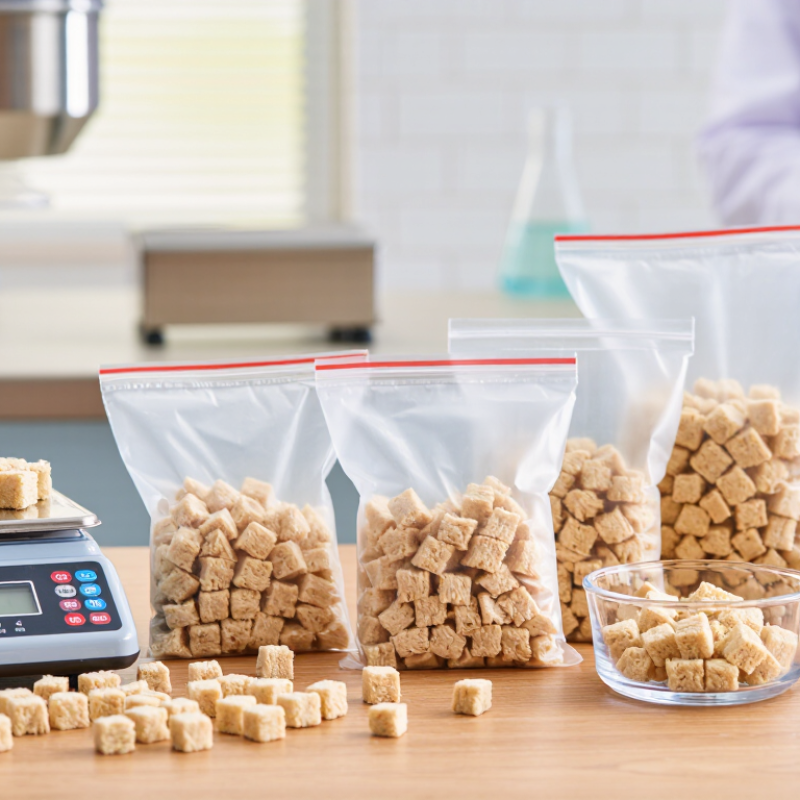
Sample testing needs practical detail. Weigh ten pieces. Check odor, color, breakage, oiliness, and package seal quality. A rancid smell is an immediate warning. Confirm the guaranteed analysis and feeding guidance match the final label. Treats are usually complementary foods, not complete diets. Do not rely only on glossy certificates. I once overlooked carton compression during transit; the product remained safe, but half the pieces arrived powdered. A stronger drop test and moisture-barrier pouch should have been required.
| Evaluation Dimension | What Buyers Should Check | Typical or Verifiable Data Point | Documents or Evidence to Request | Priority |
|---|---|---|---|---|
| Product Composition | Confirm that the product is made primarily from chicken and identify all added ingredients. | Ingredient list should clearly state chicken or chicken muscle meat, with additives such as glycerin, flavorings, or preservatives separately identified if used. | Product specification, formula sheet, ingredient statement, and allergen declaration. | High |
| Guaranteed Analysis | Compare nutritional values on a dry-treat basis and verify that the declared values are supported by testing. | Freeze-dried meat treats commonly show high crude protein and low moisture; the exact values must be confirmed by laboratory analysis rather than assumed from the product name. | Recent certificate of analysis covering crude protein, crude fat, crude fiber, moisture, and ash. | High |
| Moisture and Water Activity | Check whether the product is sufficiently dry for its stated shelf-life and storage conditions. | Moisture percentage alone is not enough; water activity testing provides a more useful indication of microbial growth risk. The supplier should provide the tested specification and acceptance limit. | Water activity report, moisture test report, production-batch records, and storage instructions. | High |
| Microbiological Safety | Verify pathogen controls for a poultry-based product. | Testing should address relevant hazards such as Salmonella, Listeria monocytogenes, Escherichia coli, and total aerobic plate count according to the destination market and buyer specification. | Batch-specific microbiological certificate of analysis and environmental monitoring summary where available. | High |
| Raw Material Traceability | Determine whether the supplier can trace chicken from receiving through processing and shipment. | Each production lot should be linked to a raw-material lot, processing date, packaging date, and finished-goods lot code. | Traceability procedure, sample lot code, supplier approval records, and recall procedure. | High |
| Processing Controls | Understand the freeze-drying process and the controls used before and after drying. | Ask for process flow details covering raw-material inspection, heat treatment if used, freeze-drying, metal detection, packing, and finished-product release. | Process flow chart, hazard analysis, critical-control-point or preventive-control records, and equipment validation information. | High |
| Food-Safety System | Check whether the facility operates under a documented food-safety management system. | Look for a current third-party certification or equivalent documented program, such as HACCP, ISO 22000, BRCGS, or another scheme accepted in the target market. | Current certificate, scope of certification, audit date, expiry date, and corrective-action status. | High |
| Packaging Performance | Assess protection against oxygen, moisture, light, puncture, and contamination during transport. | Common options include high-barrier pouches, sealed bags, oxygen absorbers, and outer cartons. Packaging must be suitable for low-moisture pet food and the intended distribution route. | Packaging specification, seal-strength or leak-test results, material declaration, and packaging migration compliance where required. | High |
| Shelf Life | Confirm the shelf-life claim under defined storage conditions rather than relying on an unsupported date. | The supplier should provide a validated shelf-life period, recommended temperature and humidity limits, and evidence from stability or retained-sample testing. | Shelf-life study, stability data, retained-sample policy, and proposed best-before format. | High |
| Label Compliance | Ensure the label meets the rules of the importing country or region. | Typical requirements include product name, species, ingredient list, guaranteed analysis, net quantity, feeding guidance, lot code, best-before date, manufacturer or responsible-party information, and storage instructions. | Final artwork, label-compliance checklist, translation review, and destination-market registration documents if applicable. | High |
| Feeding Guidance | Check whether the treat is clearly identified as a complementary product rather than a complete diet. | Feeding instructions should state an appropriate daily amount and advise that treats should not replace a nutritionally complete cat food. | Feeding guide, calorie information where available, and product-use statement. | Medium |
| Contaminant Testing | Review controls for contaminants relevant to poultry and the destination market. | Depending on market requirements, testing may cover heavy metals, veterinary-drug residues, mycotoxins, pesticides, and other regulated contaminants. | Independent laboratory reports, testing plan, regulatory-limit comparison, and corrective-action records. | High |
| Sample Verification | Compare the approved sample with the first production batch. | Check piece size, color, odor, texture, breakage rate, net weight, seal quality, label accuracy, and laboratory results before approving mass production. | Pre-production sample, signed specification, golden sample, and pre-shipment inspection report. | High |
| Minimum Order Quantity | Confirm whether the minimum order applies per flavor, package size, artwork, or total shipment. | MOQ is a commercial term and varies by packaging format, customization level, and production schedule; it should be stated in writing for each SKU. | Quotation, MOQ schedule, tooling or plate charges, and private-label setup costs. | Medium |
| Lead Time | Separate sample lead time, packaging lead time, production time, inspection time, and shipping time. | A reliable quotation should specify the number of calendar or working days for each stage and identify the event that starts the production clock. | Production schedule, delivery commitment, packaging approval timeline, and force-majeure terms. | Medium |
| Export Documentation | Verify that the supplier can provide the documents required by the importing country. | Documents may include commercial invoice, packing list, certificate of origin, health or veterinary certificate, bill of lading, and laboratory certificates, depending on the destination. | Sample document set and confirmation of responsibility for document preparation. | High |
| Quality Agreement | Define responsibilities for specifications, deviations, complaints, recalls, and change control. | A written quality agreement should specify acceptance criteria, notification periods, retained samples, audit rights, and procedures for product withdrawal. | Signed quality agreement, specification sheet, complaint form, and recall plan. | High |
| Payment and Incoterms | Clarify commercial risk, ownership transfer, insurance, and delivery responsibility. | The quotation should identify the agreed Incoterms® rule, named place, currency, payment milestones, inspection conditions, and responsibility for freight and insurance. | Proforma invoice, sales contract, payment schedule, and agreed Incoterms® rule. | Medium |