



Contact our Global Team
China’s software market is moving beyond basic automation. It now supports intelligent manufacturing, cloud operations, financial technology, logistics, healthcare, and public services. The strongest advanced software solutions combine artificial intelligence, data platforms, cybersecurity, and industry-specific workflows.
A factory in Shenzhen may use machine-vision software to identify surface defects within seconds. A logistics company in Hangzhou may coordinate thousands of parcels through cloud-based scheduling. These examples show how software can turn complex operations into measurable processes. However, impressive features do not guarantee practical value. Buyers should examine deployment records, integration costs, data governance, service response times, and employee training requirements. Real performance matters more than polished demonstrations.
Several Chinese technology providers offer mature platforms, while specialized firms often deliver deeper industry knowledge. Large vendors may provide broader ecosystems and stronger infrastructure. Smaller providers can respond faster to highly specific business needs. Neither model is automatically superior. Evidence must guide the decision.
Reliable evaluation also requires attention to regional regulations, data security, language support, and long-term maintenance. Public case studies can be selective, and published benchmarks may not reflect daily operations. That limitation deserves honest consideration. This overview will compare leading categories and representative providers through practical capabilities, market credibility, technical depth, and documented user experience. The goal is not to name one universal winner, but to identify solutions that fit clear business conditions and responsible technology practices.

China’s advanced software solutions cover more than artificial intelligence. They include cloud platforms, industrial control systems, data-management tools, cybersecurity services, and digital public-service platforms. These systems support factories, hospitals, logistics networks, banks, and research institutions. Their scope is broad because software increasingly connects physical operations with online decision-making.
A defining feature is integration. A modern industrial platform may collect data from sensors, analyze equipment temperature, and alert a technician before a breakdown. Cloud-native design helps teams expand capacity during heavy demand. Local deployment remains important for sensitive workloads, while secure remote access supports distributed teams. Strong systems also provide audit logs, role-based permissions, encryption, and clear data-retention rules. Reliability matters more than impressive demonstrations.
Practical evaluation should examine performance under pressure, not just polished interfaces. Can the software recover after a network failure? Can staff understand an automated recommendation? Does it connect with older equipment without expensive rebuilding? These questions reveal the real scope of advanced solutions in China. Yet the picture is not flawless. Integration between departments can remain uneven, and smaller organizations may lack skilled operators. Artificial intelligence can also produce confident but incorrect results. Human review is still necessary, especially in healthcare, finance, and public administration. A useful solution must therefore combine technical capability with transparent controls, measurable service standards, and training that works on an ordinary workday.
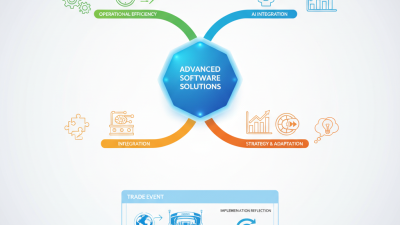
China’s advanced software landscape is shaped by practical business needs. Leading categories include enterprise resource planning, industrial design platforms, artificial intelligence, cloud collaboration, and cybersecurity. Each category solves a different operational problem.
Enterprise systems connect purchasing, inventory, finance, and production data. Industrial software supports digital factories, equipment monitoring, and process simulation. AI platforms examine customer behavior, detect defects, and forecast demand. Cloud collaboration tools help distributed teams manage documents and approvals. Cybersecurity software protects networks, endpoints, and sensitive business records.
These solutions are most effective when they fit local workflows. Chinese organizations often need strong mobile access, multilingual interfaces, and integration with existing systems. Reliability also depends on clear data governance, regular testing, and trained staff. A polished interface is not enough. Weak data can still produce confident but incorrect decisions. This remains an overlooked problem.
Tips: Compare platforms through a small pilot project. Test data accuracy, system response time, and user training requirements. Ask vendors for security documentation and service-level details. Avoid choosing software only because it offers more features. A simpler system may deliver better results when employees can use it consistently.
Technology selection also requires measurable evidence. Teams should track processing time, error rates, maintenance costs, and adoption levels after deployment. Independent audits and documented case studies can strengthen credibility. However, reported results may not match every organization. Local processes, budgets, and technical skills can change the outcome. Continuous review is necessary, even after implementation.
China’s advanced software market is shaped by three provider groups: domestic cloud platforms, industrial software specialists, and AI infrastructure firms. Their strengths differ. Cloud providers offer elastic computing, data platforms, and strong local compliance support. Industrial vendors focus on digital twins, factory scheduling, and supply-chain visibility. AI specialists add language models, computer vision, and inference tools for finance, healthcare, and manufacturing.
The China Academy of Information and Communications Technology reported that China’s cloud computing industry reached about RMB 616.7 billion in 2023. This growth supports wider use of cloud-native systems and intelligent automation. IDC’s China AI market research also identifies manufacturing, government services, and finance as major adoption areas. These sectors need reliable data pipelines, not only impressive demonstrations. In practical deployments, integration remains difficult. Older systems often resist clean connections. That weakness deserves attention.
Tips: Compare providers by deployment evidence, security controls, model transparency, and five-year operating costs. Ask for measured results, such as reduced inspection time or fewer production errors. Gartner forecast global public-cloud spending at US$675.4 billion in 2024, showing the scale of cloud investment, but global figures cannot replace local testing. Begin with a controlled pilot. Keep human review. Capability is uneven.
China's software industry revenue increased from approximately RMB 7.18 trillion in 2019 to RMB 12.33 trillion in 2023. This expanding market supports advanced solution areas such as cloud computing, artificial intelligence, industrial software, enterprise platforms, and cybersecurity. The figures represent the overall industry and do not include company-level or brand-level data.
Source: Ministry of Industry and Information Technology of China, annual software industry statistics.
China’s advanced software solutions are reshaping factories, hospitals, logistics networks, and public services. The strongest platforms combine cloud computing, industrial data, artificial intelligence, and secure workflow management. They are not merely digital tools. They change how decisions move across an organization.
The Ministry of Industry and Information Technology reported that China’s software and information technology services revenue exceeded 12 trillion yuan in 2023. Industrial software supports equipment monitoring, predictive maintenance, digital twins, and production scheduling. In a factory, a dashboard can flag abnormal vibration before a machine stops. In logistics, algorithms can adjust routes when traffic or weather changes. These applications reduce delays, but they also require clean data and skilled operators.
The China Academy of Information and Communications Technology estimated China’s digital economy at more than 50 trillion yuan in 2022. Cloud-native systems now help hospitals share records, retailers forecast demand, and local governments process applications faster. McKinsey has also estimated that generative artificial intelligence could create substantial economic value across Chinese industries, although adoption remains uneven. The gap matters. A modern platform cannot repair weak management or incomplete records. Some projects still measure success by installation numbers rather than practical outcomes. That approach deserves criticism. Reliable transformation needs transparent governance, measurable productivity gains, staff training, and regular security testing. Progress is real, but it is not automatic.
Choosing advanced software in China requires more than counting features. A useful evaluation starts with business fit, data control, integration, and measurable performance. Gartner forecasts worldwide public cloud spending at 679 billion US dollars for 2024, showing how quickly cloud-based systems are expanding. Yet rapid adoption can hide weak governance.
A practical pilot should test real workflows, not polished demonstrations. Measure response time during peak traffic, API failure rates, Chinese-language accuracy, and recovery after a simulated outage. Review whether the system connects with existing finance, manufacturing, and customer-service tools. Security deserves a separate score. IBM’s Cost of a Data Breach Report 2024 placed the global average breach cost at 4.88 million US dollars. Ask about encryption, access logs, backup frequency, and data-location controls.
Advanced analytics and automation also need careful evaluation. McKinsey’s 2024 global survey found that 65% of respondents regularly used generative AI in their organizations. Adoption is impressive, but output quality can still vary. Test misleading inputs, unclear instructions, and industry-specific terminology. Include total ownership cost, training hours, support response times, and exit conditions. No scorecard is perfect. A low-cost solution may create expensive manual work later, while a powerful platform may overwhelm a small team. Independent testing and documented evidence should carry more weight than sales promises.
A practical, brand-neutral evaluation framework for comparing advanced software solution categories in the Chinese market.
| Evaluation Dimension | Recommended Weight | What to Evaluate | Objective Evidence to Request | Relevant Chinese Reference |
|---|---|---|---|---|
| Business and Functional Fit | 15% | Coverage of core workflows, industry processes, reporting, automation, and role-based permissions. | Completed requirements matrix, workflow demonstration, configuration limits, and percentage of processes handled without custom development. | Internal business requirements and process-control policies. |
| Cybersecurity | 15% | Identity management, least-privilege access, encryption, vulnerability management, logging, backup, and incident response. | Security architecture, penetration-test summary, vulnerability-remediation process, access-control model, and audit-log sample. | GB/T 22239-2019, Information Security Technology—Baseline for Classified Protection of Cybersecurity. |
| Data Compliance and Governance | 12% | Data classification, consent handling, retention, deletion, cross-border transfer controls, and data-subject rights. | Data-flow map, processing inventory, retention configuration, export and deletion procedures, and compliance responsibility matrix. | Personal Information Protection Law, Data Security Law, and Cybersecurity Law of the People’s Republic of China. |
| Integration and Interoperability | 12% | API availability, event support, data formats, identity federation, compatibility with existing enterprise systems, and migration tools. | API documentation, sandbox access, integration test results, supported protocols, and data-migration plan. | Documented interface specifications and the organization’s enterprise architecture standards. |
| Scalability and Performance | 10% | Concurrent-user capacity, transaction volume, data growth, elasticity, latency, and performance under peak workloads. | Load-test report using the organization’s expected workload, capacity model, scaling method, and performance service levels. | Vendor test methodology and customer-specific acceptance criteria. |
| Reliability and Business Continuity | 10% | Availability design, redundancy, disaster recovery, backup integrity, recovery time, and recovery point capabilities. | Service-level agreement, disaster-recovery test records, backup-restore evidence, and documented RTO/RPO commitments. | Organization-specific business-continuity and disaster-recovery requirements. |
| Artificial Intelligence Capability | 8% | Model accuracy, explainability, human oversight, data quality, prompt or model governance, and protection against unauthorized output. | Use-case validation results, evaluation dataset description, model-monitoring process, human-review controls, and AI risk assessment. | Applicable generative-AI, algorithmic recommendation, and data-security obligations in China. |
| Localization and User Experience | 8% | Simplified Chinese support, local date and currency formats, local workflows, accessibility, mobile usability, and training requirements. | Chinese-language demonstration, usability-test results, training materials, accessibility statement, and localization checklist. | GB/T 35273-2020, Information Security Technology—Personal Information Security Specification. |
| Total Cost of Ownership | 5% | Subscription or license fees, implementation, customization, infrastructure, training, support, upgrades, and exit costs. | Five-year total-cost model with assumptions, price-adjustment rules, implementation milestones, and data-export fees. | Internal procurement budget and financial-control policies. |
| Implementation and Support | 5% | Implementation methodology, local support coverage, escalation procedures, update policy, documentation, and partner capability. | Project plan, support service levels, escalation contacts, reference implementation evidence without confidential data, and product-roadmap process. | Contractual service levels and organizational change-management requirements. |
Score every dimension from 1 to 5: 1 = insufficient, 2 = limited, 3 = acceptable, 4 = strong, and 5 = excellent. Multiply each score by the recommended weight to produce a weighted total out of 100.
85–100: preferred candidate; 70–84: viable with mitigation actions; 55–69: requires major remediation; below 55: not recommended. Treat cybersecurity and legal compliance as mandatory gates rather than optional scoring items.