




Contact our Global Team
In recent years, the concept of a Smart Hotel has emerged, fundamentally changing the travel experience. Smart Hotels utilize advanced technology to enhance guest comfort and convenience. They often feature automated systems for check-in and room control, providing guests with seamless interactions. The implementation of artificial intelligence allows for personalized services, such as tailored recommendations based on individual preferences.
However, the transformation brought by Smart Hotels is not without its complexities. Many travelers face challenges in adapting to these technologies. For some, the reliance on apps and smart devices can be overwhelming. It raises questions about accessibility and user-friendliness. While automation offers efficiency, it might lack the personal touch that some guests value.
The evolution of Smart Hotels reflects a broader trend in the hospitality industry. As technology advances, so do the expectations of travelers. Hotels must balance innovation with the need for genuine human connection. Understanding this dynamic is crucial for the future of travel. Smart Hotels could redefine our experiences, but they also invite reflection on what we cherish most about hospitality.
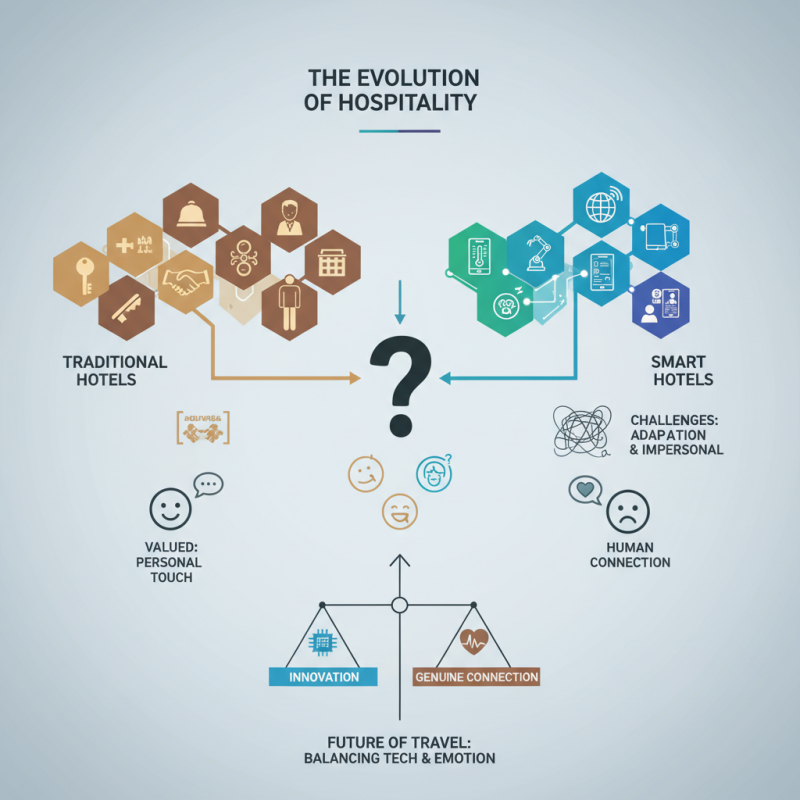
Smart hotels integrate technology to enhance guest experiences. These accommodations use advanced systems to provide convenience. Imagine checking into your room with just your smartphone. Keyless entry reduces wait times and increases privacy. Guests can control lighting and climate through apps, creating a personalized atmosphere.
These hotels often feature voice-activated assistants in every room. This allows guests to request services without lifting a finger. However, reliance on technology can be a double-edged sword. Technical failures can disrupt the experience. Some guests might miss the personal touch of traditional hospitality. The balance between innovation and human interaction remains a challenge.
Another characteristic of smart hotels is real-time data use. They track guest preferences to offer tailored recommendations. This can enhance stay quality but raises privacy concerns. Are guests comfortable with their data being collected? As smart hotels evolve, addressing these issues will be crucial for maintaining trust and satisfaction.
| Characteristic | Description |
|---|---|
| IoT Integration | Use of Internet of Things devices to enhance guest experience. |
| Mobile App Services | Guests can control room settings, book amenities, and check-in/check-out through a mobile app. |
| Smart Room Features | Rooms equipped with voice-activated controls, smart thermostats, and automated lighting. |
| Personalization | Use of data analytics to customize guest experiences and preferences. |
| Energy Efficiency | Smart systems that optimize energy use, reducing overall consumption. |
| Enhanced Security | Advanced security features such as keyless entry and smart surveillance systems. |
| Virtual Concierge | AI-driven services providing guests with recommendations and assistance. |
Smart hotels are revolutionizing the travel experience through cutting-edge technology. Guests can use mobile apps to check in, unlock doors, and control room settings. Voice-activated devices provide effortless interactions. These innovations not only enhance convenience but also personalize each stay.
Data analytics plays a crucial role in smart hotels. They assess guest preferences to tailor services. For example, adjusting room temperature based on past visits. This data-driven approach can transform customer satisfaction. However, it raises concerns about privacy and data security. Balancing guest comfort and safety is essential.
While many smart hotel features are impressive, the technology is not perfect. Technical glitches can frustrate guests. Too much reliance on tech may alienate those who prefer traditional hospitality. A seamless integration of human touch with technology remains a challenge. The journey towards creating the ideal smart hotel is ongoing.
Smart hotels represent a significant shift in the hospitality industry. They utilize advanced technology to enhance guest experience. According to a recent report by the Global Business Travel Association, 95% of travelers prefer hotels that offer smart technology. These hotels transform travel by providing personalized experiences, increased convenience, and improved energy efficiency.
Guests benefit from features like mobile check-in, smart room controls, and personalized recommendations. Data from a study by Hospitality Technology shows that 70% of guests appreciate voice-controlled devices in their rooms. Guests can adjust lighting, temperature, and entertainment options effortlessly. Smart hotels also often leverage IoT devices, enhancing security and monitoring energy use. This leads to cost savings for hotels, which can be passed on to guests.
**Tip:** Always ask about technology features when booking your stay. Some smart hotels offer unique amenities you won't find elsewhere.
Despite these advancements, challenges remain. Not all guests are tech-savvy, which can lead to confusion. Furthermore, the reliance on technology may undermine personal interactions, which many guests cherish. Balancing innovation with human touch is crucial for future success.
**Tip:** Consider how much technology you want in your travel experience. Sometimes, a traditional hotel may offer the charm you’re looking for.
Smart hotels represent a significant shift within the hospitality industry. They harness cutting-edge technology to enhance guest experiences. Imagine entering a room where the lights adjust to your preferences automatically, or controlling the temperature through a mobile app. This level of personalization is now becoming the standard. The travel experience is evolving as guests expect more streamlined processes and conveniences.
The transformation isn’t just in guest services. Staff efficiency also improves through automation. Check-in processes are quicker, and requests can be managed via smart devices. However, this reliance on technology can sometimes lead to issues. Malfunctions occur, and not every guest is tech-savvy. This creates a tension between modern convenience and traditional hospitality values. The challenge for hotels is to strike a balance. They must ensure they provide warmth and human touch while embracing innovation.
Mindful integration of technology is crucial. Smart hotels can blur the lines between comfort and automation. While guests appreciate the advantages, they may miss personal interactions. The industry's future depends on how well hotels navigate these complexities. Building trust and maintaining a human connection remain essential for robust guest satisfaction.
Smart hotels are evolving rapidly, changing how travelers experience hospitality. These hotels use advanced technology to enhance guest comfort and streamline services. From smart lighting to AI-driven concierge systems, technology creates a personalized stay. Many guests rely on mobile apps for room service and check-in. Yet, with all this convenience, some travelers feel overwhelmed by constant notifications.
Sustainability is a significant trend in smart hotel development. Green technology, such as energy-efficient appliances and smart thermostats, reduces the environmental impact. Guests now prefer hotels that demonstrate a commitment to sustainability. However, the integration of technology can lead to technical failures. When systems malfunction, it can disrupt the guest experience, leading to frustration.
Security is another crucial aspect. Smart hotels often implement advanced security measures like facial recognition. However, this raises privacy concerns among guests. Balancing high tech with human touch remains essential. Travelers seek authentic experiences alongside technological enhancements. As these trends develop, hoteliers must reflect on how to create meaningful travel experiences without losing the personal connection.