What Are Retail Technology Solutions for Global Buyers?
Global buyers are entering a retail market shaped by faster fulfillment, connected stores, and increasingly measurable customer journeys. Retail technology solutions now connect inventory, payments, customer data, artificial intelligence, and logistics across borders. The challenge is practical. A checkout screen in Singapore must feel as reliable as one in Toronto.
Deloitte’s 2024 Global Powers of Retailing report found that the world’s 250 largest retailers generated approximately $5.74 trillion in revenue. That scale highlights the value of integrated systems, but size alone does not guarantee digital success. McKinsey estimates that generative artificial intelligence could create $240 billion to $390 billion in annual value for retailers. These figures are compelling, although implementation costs and data-quality problems remain easy to underestimate. The technology is not magic.
Retail strategist Doug Stephens has often stressed, “The future of retail is not about technology; it’s about people.” His point matters for global buyers comparing platforms, vendors, and deployment models. Strong retail technology solutions should reduce stockouts, clarify customer behavior, and support local teams without creating another complicated dashboard. They should also respect privacy, accessibility, cybersecurity, and regional purchasing habits.
This guide examines the systems behind modern retail operations. It considers cloud platforms, point-of-sale tools, inventory intelligence, personalization, and omnichannel commerce. Buyers should expect measurable evidence, not impressive demonstrations alone. Some promised gains may remain uncertain. That is precisely why careful evaluation, transparent reporting, and real-world testing matter.
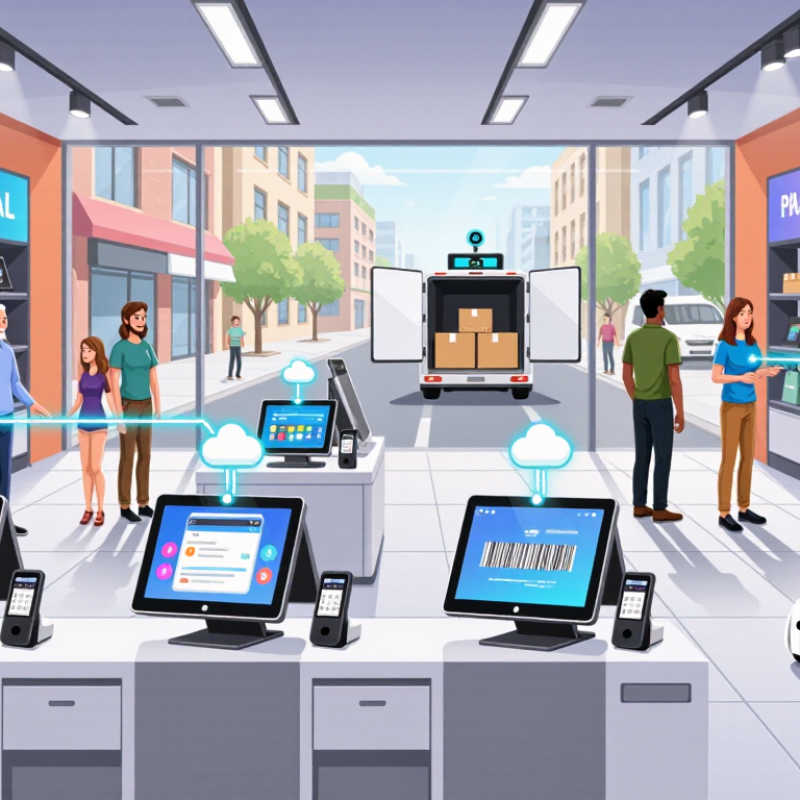
Definition and Scope of Retail Technology Solutions
Retail technology solutions are digital tools that support how retailers sell, source, manage, and improve customer experiences. For global buyers, the scope extends beyond an online store or checkout screen. It can include point-of-sale systems, inventory platforms, warehouse tools, payment processing, customer data, analytics, and product information management.
These solutions connect activities across physical shops, websites, mobile devices, and international supply networks. A buyer may need real-time stock visibility in several regions. They may also require multiple currencies, languages, tax rules, delivery options, and secure payment methods. Integration is essential. Poorly connected systems can create duplicate records, delayed orders, and confusing stock figures. Small errors become expensive at scale.
The technology should also support access control, data protection, system monitoring, and business continuity. Experienced procurement teams usually test these functions with realistic transaction scenarios, not polished demonstrations. A platform may appear powerful but still struggle with local workflows or older systems. That gap deserves honest attention. Even reliable software needs clear ownership, staff training, regular updates, and measurable service standards. Human judgment remains necessary. Data can guide decisions, but it cannot explain every unusual customer order or regional buying habit.
Core Technologies Supporting Global Retail Buyers
What Are Retail Technology Solutions for Global Buyers?
Global retail buyers depend on connected systems to compare products, verify suppliers, and place orders across markets. Product information management tools keep specifications, images, certifications, and stock details consistent. This matters when a buyer reviews the same item in several languages and currencies. Poor data creates expensive mistakes. I have seen small measurement errors delay an entire seasonal shipment.
Enterprise resource planning systems connect purchasing, inventory, finance, and supplier records. Order management systems then track requests from quotation through delivery. Application programming interfaces allow these platforms to exchange updates without repeated manual entry. Cloud infrastructure supports access across time zones, while role-based controls protect sensitive commercial data. Electronic data interchange can also reduce errors between buyers and approved suppliers.
Artificial intelligence helps classify products, detect unusual demand, and translate routine descriptions. It still needs human review. A machine may translate a technical term correctly but miss its commercial meaning. Payment technology should support local currencies, documented approvals, and transparent transaction records. Analytics dashboards can show lead times, return patterns, and regional demand by category. Barcode and radio-frequency identification tools add practical visibility inside warehouses, though implementation costs are easy to underestimate. Security testing, audit trails, and regular access reviews remain essential as buyer networks become more connected.
What Are Retail Technology Solutions for Global Buyers?
Core technologies help global retail buyers connect product discovery, specifications, ordering, fulfillment, compliance, and after-sales operations across markets.
The coverage score represents the number of common global buying workflow stages directly supported by each technology: discovery, specification, ordering, fulfillment, and after-sales service.
How Retail Technology Works Across International Markets
What Are Retail Technology Solutions for Global Buyers?
Retail technology connects stores, websites, warehouses, and customers across international markets. A modern system can manage product listings, inventory, payments, orders, and returns from one operational view. Yet the system must adapt to local currencies, languages, tax rules, payment habits, and delivery networks.
In practice, regional settings determine whether the technology works smoothly. A customer in Germany may expect familiar payment options and precise delivery updates. A shopper in Indonesia may prefer mobile checkout and local pickup. The same inventory platform should support both journeys without creating duplicate records. It also needs currency conversion, time-zone controls, and clear product measurements. Small details matter.
Integration remains the difficult part. Retailers often connect commerce platforms with warehouse tools, accounting systems, customer service software, and delivery providers. Reliable APIs reduce manual entry and improve order accuracy. Strong access controls and secure data handling protect customer information across borders. Compliance requirements also vary, so local specialists should review workflows before launch.
No system is flawless. A sudden exchange-rate change can affect margins, while poor translation can confuse buyers. Offline selling may also expose gaps when a store loses connectivity. Testing with real staff and regional customers reveals these weaknesses early. Continuous monitoring then helps teams adjust stock rules, checkout steps, and service messages as markets change.
Key Criteria for Selecting Retail Technology Solutions
Retail technology solutions help global buyers connect stores, inventory, payments, and customer data. Yet selecting one requires more than impressive demonstrations. The right system should support local currencies, languages, tax rules, and regional fulfillment practices. It must also integrate with point-of-sale tools, warehouses, ecommerce platforms, and analytics systems. During evaluations, ask vendors to show a realistic store workflow, not a polished slide deck. A five-minute test can reveal confusing screens, slow searches, or missing inventory alerts.
Security and reliability deserve equal attention. Review encryption, access controls, backup schedules, audit logs, and incident response procedures. Request measurable service targets and clear recovery times. Data residency may matter when customer information crosses borders. Scalability is another practical test. Can the solution handle holiday traffic without expensive emergency upgrades? Total cost should include setup, training, integration, support, and future customization. A low purchase price can become costly after deployment. Teams often underestimate training, then blame the software for avoidable errors. That mistake is understandable, but still expensive.
Tips:
Build a scoring sheet before demonstrations. Rate integration, compliance, usability, support, scalability, and total cost. Ask store employees to complete common tasks. Their feedback may challenge management assumptions. Keep the pilot small, measurable, and long enough to expose daily friction.
Benefits, Challenges, and Future Trends in Global Retail Technology
Retail technology solutions now shape how global buyers discover, compare, and purchase products. DHL’s 2024 E-Commerce Trends Report found that 57% of online shoppers buy from retailers outside their home countries. This creates strong growth potential. It also raises practical demands. Retailers need local currencies, regional payment methods, accurate inventory, and transparent delivery estimates. Worldpay’s 2024 Global Payments Report estimates that digital wallets represented 50% of global e-commerce transaction value in 2023. A payment page that rejects familiar wallets can lose trust within seconds.
The challenges are less visible but more expensive. Data privacy rules differ across markets, while poor translations can damage product credibility. Artificial intelligence can improve demand forecasting and customer support. However, McKinsey’s 2024 State of AI report found that 72% of organizations use AI in at least one business function. Adoption alone does not prove value. Incorrect recommendations, biased data, or automated answers may frustrate buyers. The uncomfortable truth is simple: more automation can sometimes create less confidence. Retail teams still need human review, regional knowledge, and clear escalation paths.
Tips: Test checkout on real local devices, not only desktop screens. Track payment failures by country. Let local specialists review translations and delivery promises. Review AI outputs monthly, because customer behavior changes faster than internal policies. Future systems will likely connect predictive analytics, immersive product views, and climate-aware fulfillment. Yet adoption may remain uneven. Smaller retailers may lack the data, skills, or budget to build these systems responsibly.