How to Choose a Sound Bowl Instrument?
Choosing a Sound Bowl Instrument is less about finding the loudest tone and more about matching its sound, size, and feel to your needs. Bowls differ in material, shape, weight, and how they are played. A small metal bowl may produce a bright, quick ring, while a larger one may offer a lower, lingering tone. These are useful tendencies, not guarantees; individual bowls can sound surprisingly different.
Listen carefully before you buy, if possible. Strike the bowl gently, then try circling its rim with the mallet. Notice whether the sound feels clear, steady, and comfortable in the room. Short test. Phone recordings can help you compare options, but speakers may distort low tones and sustain. Check the bowl’s dimensions, weight, included mallet, and return policy as well. A polished description cannot replace a real listening test.
Your intended use matters. A bowl for quiet personal practice may need a different tone and size than one used in a group setting. Consider where it will sit, how you will hold or play it, and whether its sound remains pleasant over time. Material claims deserve care, too: labels such as “handmade” or “traditional” do not prove that a bowl suits your preferences. This guide will explain the main types, practical listening checks, and buying considerations. There is no perfect choice for everyone, and that is worth remembering.
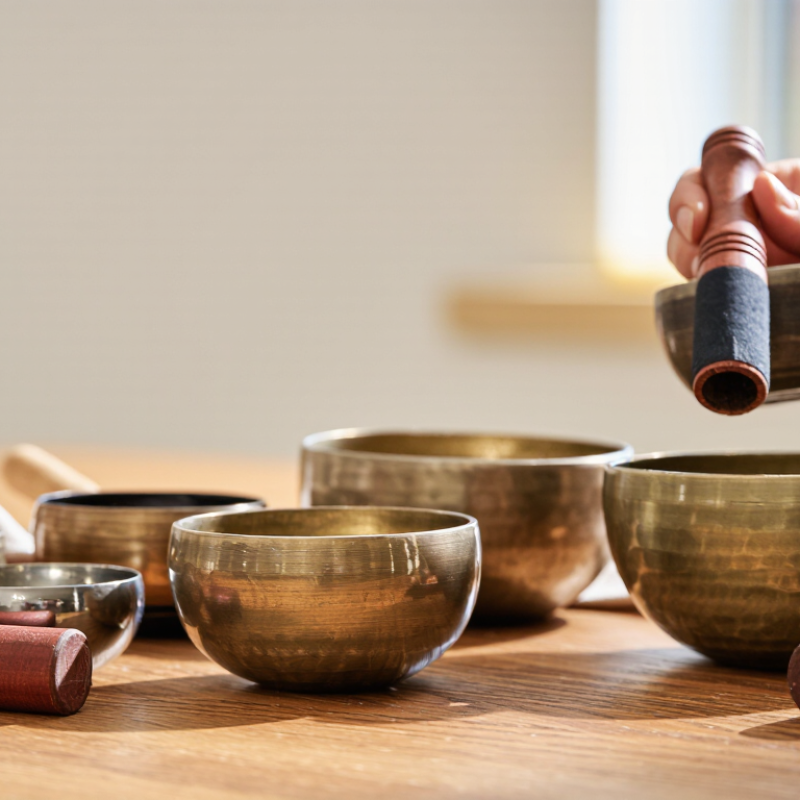
Understanding Sound Bowl Types, Materials, and Construction
A sound bowl’s material and construction shape its weight, tone, and feel. Metal bowls are commonly made from bronze or other copper-based alloys, then cast, spun, or hand-hammered. Hammered surfaces may show small marks and variations. These do not automatically indicate poor quality; check instead for cracks, sharp edges, and an unstable base. Crystal bowls are typically formed from fused quartz, with smooth walls and a more uniform appearance. Listen closely.
Construction affects how a bowl responds. A thicker rim or heavier body may feel different under a mallet, while size also influences pitch and resonance. These are tendencies, not guarantees: shape, wall thickness, and playing technique all matter. A bowl sounded with a soft felt mallet may differ from one played with a wooden striker. Ask what playing method suits the instrument, and test it gently if possible.
Choose by listening, not appearance alone. Try a few tones in a quiet room, then notice how long each sound lingers and whether it feels comfortable at a normal volume. Feel the rim for rough spots, and check whether the bowl sits steadily. I would not treat the brightest tone as automatically best; first impressions can change with repeated listening. A small flaw in finish may be harmless, but a crack deserves caution.
Comparing Size, Shape, Tone, and Resonance
Choosing a sound bowl means comparing more than diameter. A wider, heavier bowl often produces a lower fundamental tone, while smaller bowls commonly sound brighter, but shape and wall thickness also matter. Treat these as tendencies, not guarantees. Hold each bowl at the same distance and listen at a comfortable, similar volume. ISO 226:2003 maps equal-loudness contours across 20 Hz to 12.5 kHz, showing that perceived loudness changes with frequency. A low note may seem softer than a higher note, even when measured sound pressure is similar.
Listen without striking. Then wait. Notice how the tone blooms, whether partials sound smooth or harsh, and how long the resonance remains audible. A narrow rim, rounded profile, or uneven wall can change the response; labels such as “warm” are frustratingly vague. Ask for a gentle mallet strike, then compare the decay in a quiet room. If possible, test with the same mallet and playing pressure. There is no universal ideal ring time: room furnishings and distance affect what you hear. I would be cautious about choosing from a recording alone, since microphones and playback speakers color tone. Choose the bowl whose pitch and lingering overtones suit your intended setting, not merely the largest or loudest one.
How to Choose a Sound Bowl Instrument? — Comparing Size, Shape, Tone, and Resonance
| Approximate Diameter | Common Shape | Typical Tone | Resonance and Sustain | Best Suited For | What to Consider |
| 8–12 cm (3–5 in) | Compact, often with a relatively narrow opening | Usually higher and brighter in character | Often quicker to respond, with a shorter sustain than larger bowls | Travel, close listening, and gentle high-register accents | Small bowls can be harder to play evenly around the rim; check that the striker fits comfortably. |
| 13–18 cm (5–7 in) | Medium-sized, with a moderate opening and curved sides | Often balanced, with clear upper tones and a noticeable body | Moderate sustain; response varies with construction and playing technique | General-purpose playing, meditation, and a first bowl | A practical size to compare by ear because it is usually manageable to hold, strike, or play around the rim. |
| 19–25 cm (7–10 in) | Broad bowl, often with a wider opening and deeper profile | Often lower and fuller in character than smaller bowls of similar construction | Can produce a more spacious sound and longer sustain, depending on the bowl | Room-based practice, slow tones, and complementary lower notes | Check the bowl’s weight and stability, and allow enough space to move the striker around the rim. |
| 26 cm (10 in) and larger | Large, broad-bodied bowl; profiles range from shallow to deep | Often lower and weightier, though the exact pitch depends on the bowl’s dimensions and construction | May sustain for a long time; large bowls can also reveal complex overtones | Stationary use, ensemble settings, and resonant low-register sound | Consider transport, a stable cushion or surface, and whether the sound suits the room. |
Choosing tip: Diameter is only a guide, not a guarantee of pitch or sustain. Wall thickness, rim shape, material, bowl condition, striker, playing force, and room acoustics all affect the sound. If possible, listen to the bowl in person and compare it at a comfortable volume.
Matching a Sound Bowl to Your Purpose and Experience
How to Choose a Sound Bowl Instrument?
Matching a Sound Bowl to Your Purpose and Experience
Choose a bowl for how you plan to use it, not just how it looks. For quiet meditation, a smaller bowl with a clear, gentle tone may suit a calm room. For group sessions, test whether its sound carries without becoming harsh. A bowl’s material, size, and striking technique all affect its tone, so listen before buying when possible. Start gently. Beginners may find a bowl easier to use when it responds to a light, steady strike.
A 2017 observational study in the Journal of Evidence-Based Complementary & Alternative Medicine followed 62 adults during sound meditation. Participants reported immediate reductions in tension, anxiety, and other negative mood measures. This is encouraging, but it does not show that a particular bowl produces these effects or treats health conditions. Match your choice to comfort and setting. If high tones feel tiring, choose a lower, softer resonance instead. Your first preference may change after a few listening sessions.
Tips: Ask to hear the bowl both struck and rim-played. Notice its volume, how long the tone lasts, and whether the rim feels comfortable to circle. For home use, check the room’s acoustics; a bright bowl can sound sharp in a small space. If possible, compare two or three options side by side. A little uncertainty is normal.
Evaluating Craftsmanship, Comfort, and Ease of Use
How to Choose a Sound Bowl Instrument?
Evaluating Craftsmanship, Comfort, and Ease of Use
Look closely at the rim, base, and inner surface. They should feel smooth, stable, and free of visible cracks. A glossy finish can distract from an awkward edge; appearance is an imperfect shortcut. Check whether the bowl sits without rocking, then test it with a mallet you can grip comfortably. A heavy bowl may produce a rich tone, but it can be tiring to hold. Listen gently before buying. Some bowls ring longer or feel sharper than expected, and personal comfort matters more than a dramatic first impression.
Comfort includes volume and tone, not just weight. A 2017 peer-reviewed study of 62 adults reported immediate mood improvements after a sound meditation involving singing bowls and other instruments. It does not prove that one bowl design works best, or that bowls provide medical treatment. For safe listening context, the WHO-ITU 2019 standard sets an adult reference of 80 dB for 40 hours weekly on personal audio devices; it is not a bowl-specific limit. Try the instrument at a modest volume and stop if the sound feels uncomfortable.
Tips: Test the bowl seated and standing. Try the mallet with a relaxed wrist. Ask to hear a few strikes before choosing.
How to Choose a Sound Bowl Instrument?
A practical checklist for evaluating craftsmanship, comfort, and ease of use.
Suggested checklist allocation—not measured test results. Inspect the bowl’s finish and stability, check that its weight and rim feel comfortable, and try striking or playing it before choosing. Adjust the proportions to suit your needs.
Setting a Budget and Assessing Care Requirements
Set a budget for the whole setup, not just the bowl. A mallet, cushion, delivery, and possible return shipping can add to the price. Decide what matters most: a comfortable size, a particular tone, or a finish that suits your space. If possible, listen to a recording, but remember that speakers may distort a bowl’s sound. The pitch and sustain can also change with how you strike or rim it. Leave some room in your budget for that uncertainty.
Care needs depend on the bowl’s material and how often you use it. Metal bowls may develop scratches or dents if they are knocked against hard surfaces. Crystal bowls can chip or crack if dropped, so give them a stable, padded place to rest. A soft, dry cloth is usually suitable for routine dusting; check the maker’s care instructions before using cleaners or water. Small detail. Keep the mallet nearby, but not loose inside a storage case where it can bump the bowl.
Think about your actual routine. Will the bowl stay on a shelf, travel to sessions, or be handled by several people? A protective case may be worth its cost if you move it often. I’d also check the return terms before buying, since a sound that seems pleasing in a recording may feel different in a quiet room. There is no perfect budget rule; I still find that people sometimes spend on appearance before considering storage.