





Need Help?
Contact our Global Team
Contact our Global Team
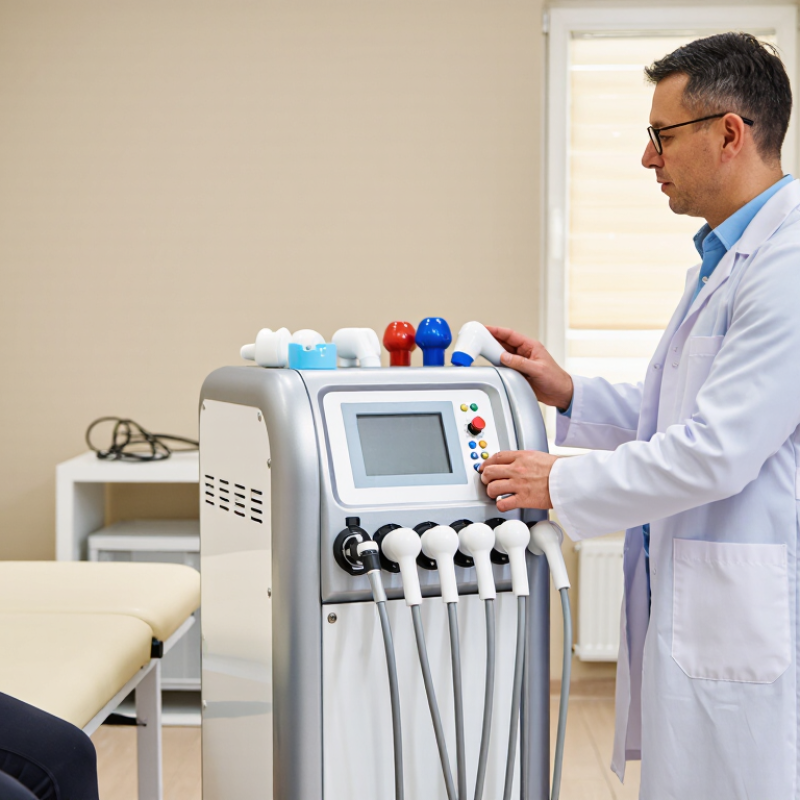
Choosing the right Physiotherapy Electric Machine starts with the treatment goal, not the product brochure. A compact unit beside a treatment table may look simple, yet its controls, outputs, and accessories affect daily clinical use. Does the device support the modalities your qualified staff actually provide? Can they adjust settings clearly and explain each choice to patients?
Dr. Emma Stokes, former president of World Physiotherapy, is a respected voice in the profession. I cannot verify a machine-specific quotation from her, so I will not invent one. World Physiotherapy describes physiotherapy as “developing, maintaining and restoring maximum movement and functional ability throughout the lifespan.” That focus offers a sound starting point: equipment should support appropriate care, not replace clinical judgment.
Look beyond feature counts. Check the intended use, available treatment modes, control precision, user training, service support, and warranty terms. Ask how the machine fits your room, patient needs, and staff workflow. Small details matter. A crowded display or awkward cable can slow a busy clinic. Not every feature helps. Compare manufacturer information with independent clinical guidance, and ask a qualified professional about suitability for your setting. Be cautious of broad promises or claims that one device works for everyone. This guide explains the practical questions to ask before choosing a Physiotherapy Electric Machine—and where careful comparison may still leave room for reflection.
Choosing a physiotherapy electric machine starts with the problem it is meant to address. A physiotherapist can assess the person’s symptoms, movement, medical history, and treatment goals before recommending a type of device. Different electrical therapies serve different purposes, so a machine should not be selected by appearance or price alone. Be specific: Is the goal to support pain management, muscle activation, or another clinician-directed treatment?
The intended user matters just as much. A device for a busy clinic may need durable controls and quick setup, while home use may call for clear instructions, simple adjustments, and a display that is easy to read. For someone with limited hand strength, small buttons can become a real obstacle. That matters. Ask who will set the treatment, check the electrodes, and notice discomfort. Home treatment should follow professional guidance, especially when health conditions or implanted devices may affect suitability.
Check that the device’s settings and accessories match the clinician’s plan, and confirm that instructions explain safe placement and use. Consider training, cleaning, maintenance, and support—not just the advertised features. I have seen people focus on extra programs before checking whether they can use the basic controls comfortably. That is an easy mistake, and worth reconsidering before purchase.
| Device Type | Primary Treatment Need | Typical Intended Users | What to Check When Choosing | Important Safety Considerations |
|---|---|---|---|---|
| TENS (transcutaneous electrical nerve stimulation) | Temporary pain relief through sensory-level electrical stimulation. It does not directly repair the underlying cause of pain. | People with pain who have been assessed and shown how to position electrodes; may be suitable for some home-use plans. | Adjustable intensity and pulse settings, clear controls, suitable electrode sizes, and instructions for placement and skin care. | Do not place electrodes across the chest, on the front of the neck, or over broken or irritated skin. Seek clinical advice before use with an implanted electronic device or reduced skin sensation. |
| NMES (neuromuscular electrical stimulation) | Produces muscle contractions to support muscle activation or strengthening when used as part of a rehabilitation plan. | People working on muscle activation or recovery, commonly with guidance from a physiotherapist or other qualified clinician. | Adjustable pulse duration, frequency, intensity, and contraction/rest timing; controls should allow gradual, comfortable progression. | Electrode placement and intensity matter. Avoid unsupervised use over the chest or front of the neck. Obtain professional advice for implanted devices, pregnancy, impaired sensation, or relevant medical conditions. |
| Interferential current (IFC) | Electrical stimulation sometimes used in clinical practice for pain management. Benefits can vary, and it is not established as superior to other approaches for every condition. | People receiving clinician-led treatment where IFC is considered appropriate alongside other care. | Clear channel and intensity controls, appropriate electrode leads, and settings that can be selected and monitored by a trained user. | Use only with suitable screening and electrode placement. Follow the same general precautions as other electrical stimulation devices, particularly around implanted electronic devices and areas with reduced sensation. |
| Therapeutic ultrasound | Uses sound waves to deliver energy to tissue; selected applications may aim for thermal or non-thermal effects. It is not an electrical stimulation treatment, although the unit is electrically powered. | Usually used by a trained clinician when an assessment supports a specific application; it is not a general-purpose treatment for all pain or injuries. | Check the available frequency and intensity controls, treatment timer, transducer condition, and whether the device is intended for the proposed clinical use. | Requires correct technique and continuous transducer movement. Avoid inappropriate treatment over areas such as the eyes or reproductive organs; follow professional guidance for pregnancy, suspected malignancy, impaired sensation, or other risk factors. |
Selection note: Match the device to the treatment goal, the user’s ability to operate it safely, and advice from a qualified healthcare professional. Electrical modalities should not replace assessment or an individualized rehabilitation plan; suitability and precautions depend on the person and treatment area.