



Contact our Global Team
Choosing the best Glycine Powder supplier is a quality decision, not just a price comparison. Grand View Research’s 2023 glycine market report estimated the global market at about US$1.1 billion in 2022 and projected continued growth. That estimate covers multiple applications; it does not prove that any supplier’s product meets your requirements. The figures offer context, not a quality guarantee.
Joseph M. Juran, a leading quality expert, defined quality as “fitness for use.” For buyers, that means checking whether a supplier can consistently meet the intended grade and specifications. Request a recent certificate of analysis, then confirm that it identifies the tested lot, assay result, test method, and relevant impurity limits. Ask how samples are retained and how out-of-specification results are investigated. Paperwork matters. So does whether it matches the powder in the sealed sample jar.
Supplier assessment should also cover manufacturing controls, traceability, change notification, and responsiveness to technical questions. Where appropriate, review audit records and verify that testing is performed by a qualified laboratory. Compare packaging integrity and moisture controls, too; a damp, clumped sample deserves a closer look. These checks make comparisons more practical than relying on a low quotation or broad claims of “high purity.”
No checklist removes all uncertainty. Supplier documents can be incomplete, and market reports cannot predict the performance of an individual batch. A careful buyer records open questions, verifies critical claims, and reassesses suppliers over time. The strongest choice is the one supported by clear evidence, consistent communication, and specifications suited to your actual application.
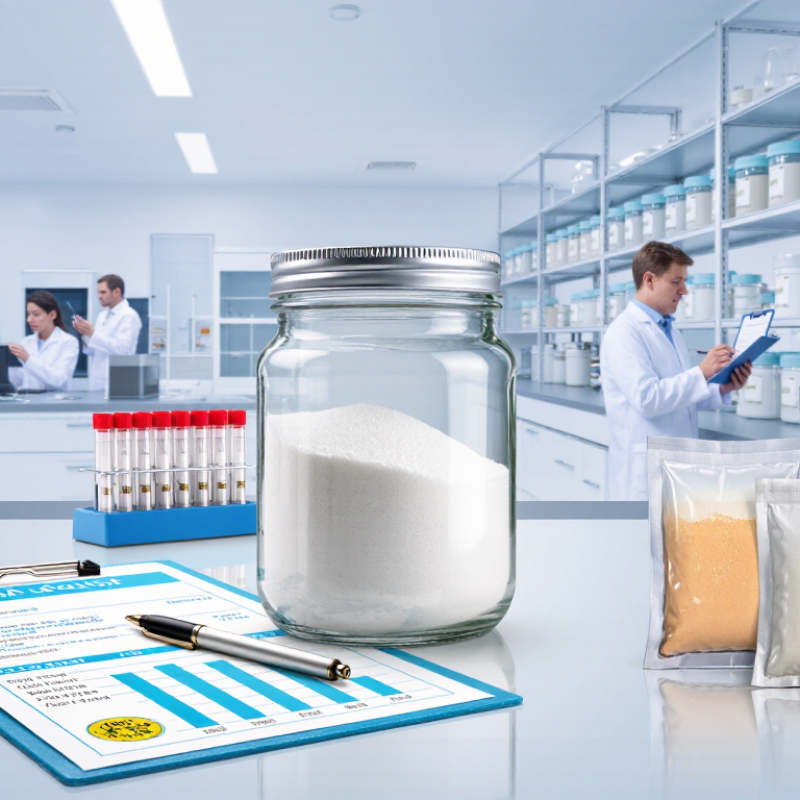
Define the intended use before requesting quotations. Glycine for a dry beverage mix may need different particle size, solubility, and handling characteristics than material used in tablets. Specify grade, assay, moisture limit, particle-size range, packaging, and required documentation. Be precise.
The FAO/WHO Joint Expert Committee on Food Additives (JECFA) lists a glycine assay range of 98.5–101.5% on a dried basis and a loss-on-drying limit of 0.5%. Use these values as a reference, not a substitute for your application-specific specification. Ask for a recent, lot-specific certificate of analysis, test methods, and traceability details. If powder must flow through a small hopper, request particle-size data and a sample for a practical handling check. A polished COA is helpful, but it cannot show how the powder performs in your process.
Tips: Write requirements as measurable limits, then confirm the supplier can test them consistently. Compare samples under the same storage and mixing conditions. I would leave room for adjustment: a specification that looks exact on paper may still need refinement after a production trial.
Example compendial specification benchmarks for screening supplier documents. Confirm the current monograph and grade requirements for your intended use.
Assay is shown as an acceptable range; loss on drying and residue on ignition are maximum limits. These are separate specification checks, not measures to compare by bar length. Ask suppliers for a current certificate of analysis and confirm that its test methods and limits match your requirements.
A reliable glycine powder supplier should provide a current, batch-specific certificate of analysis, not just a general product sheet. The FAO/WHO Joint Expert Committee on Food Additives (JECFA) specification sets glycine assay at 98.5–101.5% on a dried basis and loss on drying at no more than 0.5%. Compare reported results with these limits, and check which test methods the supplier uses. Numbers need context. A certificate that omits method details, test date, or batch identification leaves important questions unanswered.
Ask for results on moisture, heavy metals, and relevant impurities, plus particle-size distribution when powder handling matters. A fine powder may pour differently from coarser granules; request a sieve analysis rather than relying on terms like “free-flowing.” For independent testing, confirm that the laboratory holds ISO/IEC 17025 accreditation for the methods involved. Also check whether specifications match the intended grade and use. A clean certificate can still leave gaps. It may not describe storage conditions or how often each batch is tested. Request written answers, then compare them against the supplier’s published specification and the JECFA reference.
When assessing a glycine powder supplier, look beyond a polished catalogue. Ask how long the team has handled amino-acid ingredients and whether technical staff can explain purity testing, moisture control, and particle-size options. Specific answers matter. Request a recent certificate of analysis and confirm which test methods support its stated assay. A certificate alone does not prove consistent production.
Inspect the manufacturing process, not just the final product. Ask about incoming-material checks, batch records, cleaning procedures, and how deviations are investigated. These details show whether quality controls operate on the production floor or only in sales documents. If possible, review the facility or arrange a qualified third-party audit. Check whether the supplier can maintain specifications across repeat orders and trace each batch through shipment. Small gaps can matter. A neat document set can feel reassuring, but documents must reflect real practice.
Tips: Ask for sample records from more than one production batch. Compare specifications, test results, and packaging details. Note unclear answers, then follow up in writing. No supplier is flawless; the response to a reasonable concern can reveal as much as the paperwork.
| Evaluation Dimension | What to Verify | Evidence to Request | Strong Supplier Indicators | Potential Warning Signs |
|---|---|---|---|---|
| Product and application expertise | Confirm the supplier understands the intended application, such as food, dietary supplements, or pharmaceutical manufacturing. Grade requirements vary by use and applicable regulations. | Product specification, intended-use information, applicable compendial or regulatory references, and technical support contact. | Clearly explains which grade is offered and which requirements it is designed to meet. | Uses “food grade,” “pharmaceutical grade,” or similar terms without a specification or supporting documentation. |
| Manufacturing process knowledge | Ask whether glycine is produced by chemical synthesis or fermentation, and how the process is controlled. The route can affect process controls and impurity considerations. | Manufacturing overview, process-control summary, and information on how changes to the process are reviewed. | Can describe the production route and relevant controls while protecting confidential process details. | Cannot identify the manufacturing site or provide a basic explanation of process oversight. |
| Identity and composition testing | Check that each lot is tested for identity and assay using defined methods and acceptance criteria. | Recent lot-specific certificate of analysis (COA), test methods, results, and specification limits. | COA identifies the lot and reports actual results, units, methods, and pass/fail limits. | Provides only a generic sample COA, or lists results without methods, units, or lot identification. |
| Impurity and contaminant controls | Review limits and testing or risk-based controls for relevant impurities, including elemental impurities and process-related contaminants where appropriate to the application. | Impurity specification, analytical results or risk assessment, and explanation of the testing frequency. | Controls are based on the product’s process, intended use, and applicable requirements. | Makes broad “free from contaminants” claims without defined limits or supporting evidence. |
| Microbiological quality | Determine whether microbial testing is required for the intended use and whether the supplier has suitable limits and controls for the powder and its handling. | Microbiological specification, relevant lot results, sampling plan, and environmental or hygiene-control overview. | Explains the applicable limits and testing approach rather than applying the same claims to every use. | Cannot provide a rationale for microbial limits or describes controls without documentation. |
| Quality management system | Assess the quality system at the manufacturing site, including document control, deviations, corrective actions, change control, and internal audits. | Current quality-system certificates where applicable, audit information, and a description of change-notification practices. | Provides relevant, current documentation and explains how product or process changes are communicated. | Relies on an expired certificate or cannot clarify which site and activities are covered. |
| Manufacturing capacity and consistency | Confirm available production capacity, typical lead times, minimum order quantities, and the ability to maintain consistent specifications across lots. | Capacity and lead-time information, recent lot-to-lot data where available, and supply-continuity procedures. | Provides realistic commitments and has a documented process for managing supply interruptions. | Promises immediate or unlimited supply without explaining production planning or contingency measures. |
| Packaging and storage | Check that packaging is appropriate for the product, protects it during transport and storage, and is suitable for the intended market and use. | Packaging specification, storage conditions, shelf-life support, and shipping or handling instructions. | Provides clear storage guidance and uses packaging with defined material and closure specifications. | Does not state storage conditions, shelf life, or packaging details. |
| Traceability and documentation | Verify that raw materials and finished lots can be traced and that relevant records are retained. | Lot-coding explanation, traceability procedure, COA, and available safety or technical data sheets. | Can link delivered material to a specific lot and provide consistent, controlled documents. | Documents have inconsistent product names, lot details, or revision dates. |
| Supplier qualification and support | Evaluate responsiveness to technical questions, complaint handling, and willingness to support audits or qualification requests. | Questionnaire responses, complaint procedure, audit options, and named quality or technical contact role. | Answers are documented, timely, and routed to appropriate quality or technical personnel. | Sales responses replace technical answers, or quality concerns receive no documented follow-up. |
Assessment note: Request documentation for the specific manufacturing site and lot under consideration. Specifications, testing, and certification needs depend on the intended application and applicable local requirements; verify claims independently before qualification.
A supplier’s certificate is only useful if it is current and covers the site making your glycine powder. Ask for the document, check its scope and expiry date, and confirm it with the issuing body when possible. Look beyond the logo. A certificate does not prove that every batch meets your specifications.
Request a recent, batch-specific certificate of analysis. Match its lot number to the drum label and shipping paperwork. Check the stated purity, test methods, and release date. Keep the records. Then ask the supplier to trace one lot from incoming materials through production and dispatch. The answer should identify dates, records, and responsible steps, not just promise full traceability. Small details matter. A missing link may be an honest paperwork slip, but note how quickly and clearly it is corrected.
Supply reliability needs evidence, too. Ask about typical lead times, production capacity, inventory practices, and how the supplier handles delays or specification changes. Compare promised delivery windows with recent order history, if available. A backup plan sounds reassuring, but ask what it actually covers: another production line, reserved stock, or merely an estimate. No supplier runs perfectly every month. What matters is whether communication stays timely and the corrective plan is specific when a shipment slips.
How to Choose the Best Glycine Powder Supplier
Compare the full cost, not just the price per kilogram. A low quote may exclude freight, testing, or special packaging. Ask for a written breakdown covering minimum order quantity, lead time, payment schedule, and shipping fees. Check whether the quoted price applies to a specific batch size and remains valid long enough for your purchasing cycle. Small details matter.
Review the terms before comparing offers. Confirm what happens if a shipment arrives late, damaged, or with documentation missing. Request a recent certificate of analysis and check that its batch number matches the product being offered. Also compare packaging size, storage guidance, and stated shelf life. Clear answers are useful evidence of a supplier’s process, though they cannot guarantee every delivery will go smoothly.
Tips: Put each quote in a simple table. Include product cost, freight, testing, payment terms, lead time, and minimum order. Ask for any extra charges in writing. Then compare the total landed cost.
A shorter payment term can affect cash flow, while a longer lead time may require more inventory space. Consider the cost of both. I would not choose on price alone; I have learned that an unclear clause can outweigh a small discount. Still, supplier conversations can feel reassuring without proving much. Verify details against documents, and note any unanswered questions before placing an order.