



Contact our Global Team
Choosing the right Chinese partner can feel exciting, but the buying journey often contains hidden friction. Different languages, time zones, payment procedures, product standards, and service expectations may affect every decision. This guide explores China Top 10 Experience Solutions for Global Buyers, focusing on practical ways to make sourcing clearer, faster, and more reliable.
The selected experience solutions may include factory tours, product demonstrations, sample development, multilingual communication, digital showrooms, customized packaging, installation guidance, and after-sales support. Each solution should be judged through evidence, not attractive promises. Buyers can request recent case studies, verify certifications, inspect production areas, and test response times before signing a contract. A useful detail matters: Can the supplier explain a sample change at 9 a.m. Beijing time and provide a clear update by the buyer’s afternoon?
Real experience is rarely perfect.
A strong supplier may still miss a deadline, misunderstand a specification, or offer limited support in a distant market. That is why this article considers both strengths and weaknesses. It compares service quality, technical capability, communication accuracy, transparency, and long-term support. Information should be checked against current supplier records, independent reviews, and direct conversations. Rankings can change as companies expand, markets shift, and buyer expectations develop. The purpose is not to promise effortless cooperation. It is to help global buyers ask sharper questions, reduce avoidable risks, and select experience solutions that fit their products, budgets, timelines, and compliance responsibilities.

China’s top 10 experience solutions for global buyers begin with factory visits, sample development, video audits, and production updates. These services make distant sourcing more tangible. Buyers can inspect workshop layouts, review material samples, and compare finished products under natural light. A clear sample approval process prevents costly misunderstandings later.
Other practical solutions include multilingual communication, technical drawing support, small-batch orders, packaging customization, quality inspections, and shipment coordination. A reliable supplier should explain tolerances, lead times, payment stages, and inspection standards in plain language. Photos alone are insufficient. A third-party inspection can check dimensions, labeling, carton strength, and product consistency before shipment. That small step often protects both budget and reputation.
Digital tools improve the experience further. Shared production schedules, video calls, and cloud-based documents help buyers follow progress across time zones. However, communication is not always smooth. Translation can hide technical differences, and delivery estimates may change during peak seasons. I have found that written specifications are more dependable than friendly promises. Buyers should request corrective-action records when problems appear. No sourcing process is flawless. Some suppliers respond slowly, while some buyers provide incomplete requirements. That weakness deserves attention. Clear questions, realistic quantities, and documented approvals create a more reliable working relationship.

Global buyers need different kinds of confidence before placing an order. A factory visit helps procurement teams assess equipment, workflow, and worker safety in real time. A guided trade fair meeting saves time when buyers compare many suppliers in one day. Virtual showroom tours support teams that cannot travel. Clear evidence still matters.
Sample development suits buyers testing materials, packaging, or product performance. A customization workshop connects technical drawings with practical production limits.
Supplier verification helps buyers review registration details, export experience, and communication records. Third-party quality inspection adds an independent check before shipment. These services reduce uncertainty, but they do not replace careful contracts or local compliance reviews.
Small-batch trial orders serve buyers who need market feedback before scaling. Logistics planning helps coordinate cartons, documents, delivery schedules, and customs requirements. After-sales communication supports buyers when specifications change or defects appear.
I have found that written photos, inspection points, and signed samples prevent many avoidable disputes. Yet misunderstandings still happen. Details matter. A translation may sound correct but miss a technical meaning. One weak assumption can affect an entire shipment.
Buyers should define acceptance standards, payment terms, and responsibility for delays before production starts. The best experience solution is therefore matched to the buyer’s real risk, budget, timeline, and level of technical knowledge.
China Top 10 Experience Solutions for Global Buyers
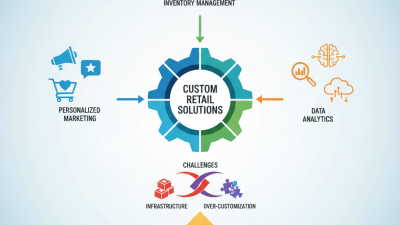
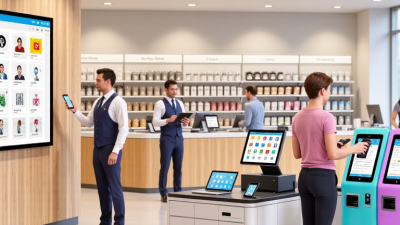
China’s experience solutions increasingly combine artificial intelligence, cloud computing, and connected hardware. Common categories include smart retail, immersive exhibitions, digital tourism, intelligent offices, interactive education, and virtual showrooms. These solutions often use computer vision to recognize movement, cameras to measure visitor flow, and sensors to track temperature or equipment status. Touchscreens, voice interfaces, and multilingual software can make public spaces easier to navigate. Some systems also use augmented reality, virtual reality, and digital twins to present complex products in vivid detail.
For global buyers, edge computing is especially useful. It can process selected data near the device, reducing delays when internet access is unstable. Cloud dashboards then help managers compare traffic, engagement, and equipment performance across locations. Strong solutions should include role-based access, encrypted data transfer, audit logs, and clear data-retention settings. Accessibility matters too. Adjustable text size, captions, tactile controls, and simple navigation support more visitors. These features are practical, not decorative.
A careful buyer should request a live demonstration and a small pilot. Ask how the system handles poor lighting, accents, network failure, and software updates. A polished demonstration may hide maintenance problems. Hardware integration can also take longer than expected. Local language support may feel acceptable but still miss cultural details. The best evaluation checks response time, training needs, service coverage, and total operating cost. No solution fits every market. Even a technically strong system may need redesign after real users test it.
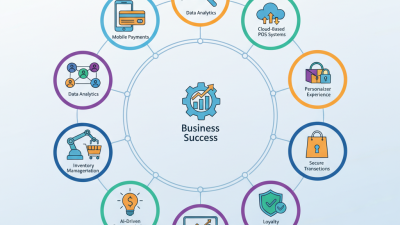
Key features and technologies commonly used in China’s experience-solution ecosystem. The capability score is an editorial benchmark based on the breadth of practical technology coverage across AI, cloud platforms, IoT, 5G, automation, immersive interfaces, and data analytics.
Higher scores indicate broader technology coverage and stronger suitability for complex, scalable deployments. Typical features include real-time data processing, intelligent automation, connected devices, digital twins, omnichannel interaction, and secure cloud integration.
When comparing China’s top ten experience solutions, global buyers should begin with a clear business problem. The options may include customer service platforms, smart retail systems, logistics tools, payment interfaces, and workplace software. Each solution should match a measurable need. Define targets for response time, conversion rate, operating cost, and user satisfaction. Avoid choosing a solution because its demonstration looks impressive. A polished demo can hide difficult integration work.
Ask suppliers for recent customer references in markets similar to yours. Request a live test with sample data, not prepared slides. Check API performance, language quality, mobile usability, and support response times. Test the complete user journey, from account creation to refund handling. Small failures matter. A delayed email or unclear error message may damage trust quickly. Review the supplier’s technical documentation and staff experience. Independent audits can strengthen confidence, but buyers should verify their scope and date.
Data protection requires careful attention across borders. Examine hosting locations, access controls, retention periods, incident procedures, and subcontractors. Confirm that contracts address applicable privacy, consumer protection, accessibility, and security requirements. A local legal review is sensible. Buyers should also compare total ownership costs, including training, customization, maintenance, and exit fees. In my experience, pilot projects reveal more than long negotiations. Still, pilots can be too narrow and create false confidence. Test busy periods, poor network conditions, unusual customer requests, and recovery after system failure before signing a long-term agreement.
| Rank | Experience Solution | Best-Fit Buyer Need | Typical Deliverables | Common Lead-Time Benchmark | Key Evaluation Metrics | Recommended Compliance Evidence | Commercial Flexibility | Overall Evaluation Score |
|---|---|---|---|---|---|---|---|---|
| 1 | End-to-End Sourcing and Supplier Coordination | Buyers that need one structured process from supplier discovery to shipment. | Supplier shortlist, quotation comparison, sample coordination, purchase-order follow-up, production updates, and shipping documents. | Supplier screening: 1–3 weeks; production timing depends on product complexity. | Verified supplier records Response time Total landed cost Order visibility | Business registration, factory information, product certifications, reference orders, and documented quality procedures. | Suitable for mixed orders, multiple suppliers, staged purchasing, and negotiated payment terms. | 9.2 / 10 |
| 2 | OEM and ODM Product Development | Importers seeking customized products, private-label designs, or differentiated specifications. | Technical drawings, material selection, prototypes, packaging artwork, production samples, and revision records. | Prototype development: commonly 2–8 weeks; mass production follows sample approval. | Design accuracy Sample approval rate Tooling control Change management | Material declarations, test reports, restricted-substance records, product drawings, and signed approval samples. | Usually supports tiered pricing, tooling amortization, forecast-based purchasing, and staged approvals. | 9.0 / 10 |
| 3 | Independent Quality Inspection and Testing | Buyers that require objective verification before shipment or during production. | Pre-production checks, during-production inspections, final random inspection reports, defect photographs, and test results. | Inspection scheduling: commonly 1–5 working days, subject to factory readiness. | AQL inspection Defect rate Test coverage Report turnaround | Inspection checklist, sampling plan, calibration records, laboratory reports, and corrective-action evidence. | Can be used as a one-time service or integrated into every purchase order and production milestone. | 8.9 / 10 |
| 4 | Supplier Audit and Risk Assessment | Buyers comparing new suppliers or building a more resilient supply base. | Factory capability review, production-equipment assessment, workforce overview, compliance review, and risk-rating report. | Desk assessment: several days; on-site audit: commonly 1–3 weeks to arrange. | Capacity Financial stability Process control Business continuity | Audit checklist, corrective-action plan, labor and environmental records, insurance evidence, and ownership documentation. | Particularly valuable for long-term contracts, dual sourcing, and high-value or regulated products. | 8.7 / 10 |
| 5 | Regulatory and Product Compliance Support | Buyers selling into markets with strict safety, labeling, chemical, electrical, or documentation requirements. | Requirement matrix, labeling review, technical-file checklist, testing plan, declarations, and document gap analysis. | Document review: 1–4 weeks; laboratory testing may require additional time. | Market eligibility Test completeness Label accuracy Traceability | Accredited laboratory reports, declarations of conformity, safety data sheets, material records, and batch traceability. | Can reduce rework and customs risk, although testing and certification costs vary by product and destination market. | 8.6 / 10 |
| 6 | Prototyping, Sampling, and Small-Batch Validation | Start-ups and established buyers testing demand before committing to full-scale production. | Functional samples, appearance samples, pilot batches, user-test units, packaging samples, and revision logs. | Simple samples: 1–3 weeks; complex prototypes or tooling: commonly 4–10 weeks. | Prototype functionality Revision speed Unit economics Pilot yield | Approved golden sample, bill of materials, test protocol, dimensional records, and documented engineering changes. | Lower initial commitment than full production, but unit cost is normally higher at small volumes. | 8.4 / 10 |
| 7 | Packaging, Labeling, and Retail-Readiness | Buyers needing export-ready packaging that protects products and meets destination-market requirements. | Packaging structure, carton specifications, barcode placement, warning labels, inserts, pallet plans, and drop-test samples. | Artwork and sample approval: commonly 2–6 weeks, depending on materials and printing complexity. | Damage rate Packaging efficiency Label compliance Cube utilization | Packaging test records, material specifications, recycling marks, barcode verification, and approved artwork files. | Supports localization, multilingual packaging, assortment changes, and shipment-volume optimization. | 8.2 / 10 |
| 8 | Export Logistics and Consolidation Management | Buyers purchasing from several factories or shipping to multiple international destinations. | Shipment consolidation, carton measurements, export documents, booking coordination, tracking, and delivery milestones. | Documentation and booking: commonly 2–7 working days after cargo readiness. | On-time shipment Freight cost Document accuracy Cargo visibility | Commercial invoice, packing list, transport document, origin documentation where applicable, and customs data. | Supports common Incoterms such as EXW, FOB, CIF, and DDP when legally and operationally appropriate. | 8.1 / 10 |
| 9 | Digital Procurement and Order Visibility | Buyers managing recurring orders, multiple suppliers, or teams in different countries. | RFQ records, approved supplier database, purchase-order tracking, production milestones, document storage, and exception alerts. | Initial setup: commonly 1–6 weeks, depending on workflow complexity and data integration. | Data accuracy Update frequency Workflow adoption Exception response | User access controls, audit trails, data-retention policy, document versioning, and supplier verification records. | Improves repeat-order control and reporting, but requires consistent supplier data and disciplined process adoption. | 7.9 / 10 |
| 10 | After-Sales, Warranty, and Continuous Improvement | Buyers prioritizing long-term customer satisfaction, returns control, and product improvement. | Warranty workflow, replacement policy, failure analysis, return tracking, corrective actions, and product-improvement reports. | Initial response: commonly within 1–3 business days; resolution time depends on defect type and replacement availability. | Response time Return rate Root-cause closure Customer satisfaction | Warranty terms, serial or batch tracking, failure analysis, corrective-action records, and spare-parts documentation. | Most effective when service responsibilities, remedy limits, evidence requirements, and response targets are written into the contract. | 7.7 / 10 |
China Top 10 Experience Solutions for Global Buyers
Successful implementation starts with evidence, not attractive demonstrations. China had 915 million online shoppers by the end of 2023, according to CNNIC’s 53rd Statistical Report. Global buyers should study customer journeys, payment habits, delivery expectations, and after-sales complaints. Interview local distributors and end users. Then select one city, product category, and service scenario for a controlled pilot.
Keep the process measurable. Define targets for response time, delivery accuracy, return handling, and customer satisfaction. China’s 2023 Logistics Performance Index score was 3.7, according to the World Bank, but performance can vary sharply between regions. Test warehouse locations, customs documents, language support, and data protection procedures before scaling. Use bilingual operating instructions and record every exception. Small details matter.
Review the pilot weekly with local technical and compliance specialists. A dashboard may show fast delivery while hiding incomplete installation support. That mistake is common. Global teams should also verify supplier qualifications, product testing records, service training, and contract responsibilities. Avoid copying a successful model without adjustment. Our first assumption may be wrong. Leave room for customer feedback, seasonal demand, and regional differences. A second pilot can test revised pricing, service scripts, and spare-part availability before broader deployment.