China Top Industries and Solutions for Global Buyers
China has become a major sourcing destination for buyers seeking reliable products, flexible production, and competitive manufacturing capacity. Its leading industries include electronics, machinery, renewable energy equipment, textiles, furniture, construction materials, and packaging. Each sector offers different strengths, risks, and purchasing requirements.
This guide introduces practical industries solutions for global buyers. It focuses on factory capabilities, product quality, certifications, communication, and delivery performance. A capable supplier should provide clear specifications, traceable materials, sample testing, and realistic production schedules. Buyers should also review business licenses, audit records, inspection reports, and export experience before signing contracts. A polished website is not enough.
Details matter. A shipment of LED lighting may require voltage checks, safety testing, and protective packaging. A machinery order may need installation drawings, spare parts, and local service support. Textile buyers should examine fabric weight, color consistency, stitching, and washing results. Small differences can create expensive delays.
No market is frictionless.
China’s manufacturing ecosystem is broad, but supplier quality varies by region, scale, and specialization. This article therefore avoids simple promises and encourages evidence-based decisions. It considers price, but not price alone. It also examines compliance, intellectual property protection, payment security, logistics planning, and after-sales communication. These areas often determine whether a sourcing project succeeds beyond the first order.
The recommendations draw on common international procurement practices and practical supplier-evaluation methods. However, requirements differ across countries and product categories. Buyers should confirm current standards with qualified local advisors and recognized testing bodies. A careful process may feel slower, yet it often prevents larger problems later.
China’s Industrial Landscape and Global Market Position
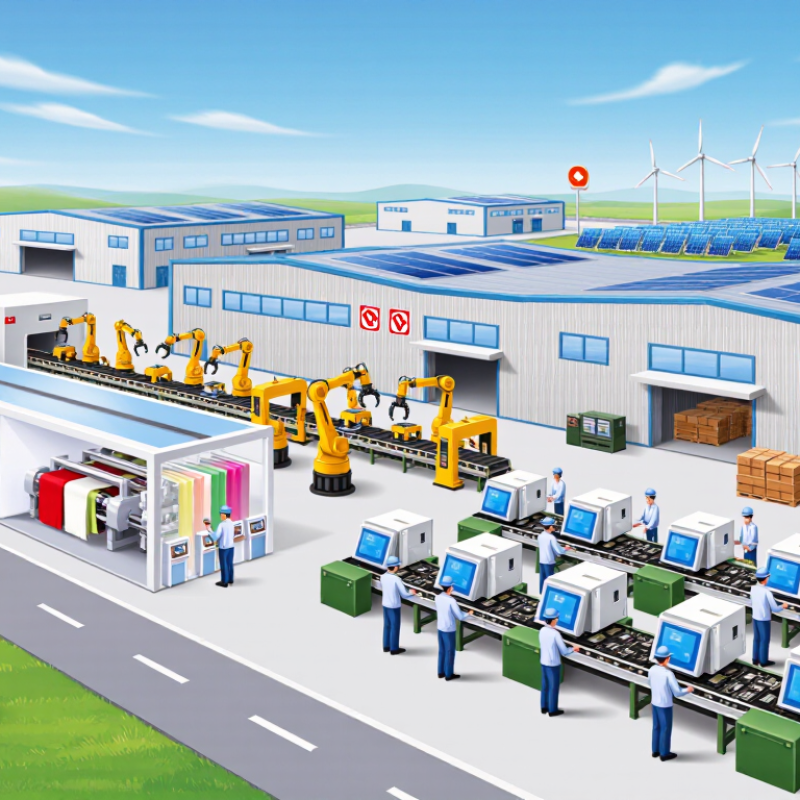
China’s industrial landscape is broad, combining established manufacturing with newer capabilities in automation, renewable energy, electronics, machinery, and materials. Production is often concentrated in regional clusters, where suppliers, component makers, and logistics services operate close together. This can shorten sourcing cycles. It can also make a product’s supply chain difficult to understand without careful mapping.
China remains a major participant in global trade, supported by extensive infrastructure, skilled production networks, and access to international shipping routes. Yet capacity and quality vary between suppliers, even within the same industry. Buyers should compare technical specifications, sample consistency, production capacity, and documented quality controls. Check lead times against actual shipping schedules, not only a quoted factory date. Small details matter: a packaging change or missing inspection record can delay a shipment. Market conditions also shift, so older price and capacity assumptions may no longer hold.
Tips: Define acceptance criteria before requesting samples. Ask how critical components are sourced, and verify records where possible. Compare total landed costs, including freight, duties, and inspection. Keep communication written and specific. A clear checklist helps, though it will not catch everything. Allow time for an independent review, especially when product requirements are complex.
China Top Industries and Solutions for Global Buyers – China’s Industrial Landscape and Global Market Position
| Industry |
China Market Indicator |
Global Market Position |
Potential Buyer Applications |
Procurement Considerations |
| Manufacturing |
Manufacturing value added reached approximately RMB 33.1 trillion in 2023, with year-on-year growth of 5.0%. |
A large, broad-based manufacturing sector with extensive supplier ecosystems across multiple product categories. |
Contract manufacturing, components, industrial inputs, and finished goods. |
Compare total landed cost, production capacity, quality controls, lead times, and applicable import requirements. |
| Electrical and Mechanical Products |
Exports reached RMB 13.92 trillion in 2023, approximately 58.6% of China’s total goods exports. |
A major export category spanning electrical equipment, electronics, machinery, and related products. |
Factory equipment, electrical components, consumer electronics, and replacement parts. |
Confirm technical specifications, safety certification, software or interface compatibility, and after-sales support. |
| Automotive |
China exported approximately 4.91 million vehicles in 2023, up 57.9% year on year. |
A rapidly expanding vehicle export sector that includes conventional, hybrid, and battery-electric vehicles. |
Passenger and commercial vehicles, components, and electric-mobility supply needs. |
Check local homologation, emissions and safety rules, charging standards, warranty coverage, and parts availability. |
| Solar Photovoltaics |
In 2023, reported output included about 622 GW of silicon wafers, 545 GW of solar cells, and 499 GW of modules. |
A large-scale supply base across key stages of the photovoltaic value chain. |
Utility-scale projects, commercial rooftops, residential installations, and solar-system components. |
Verify module performance, product certification, traceability, project warranties, and destination-market trade rules. |
| Lithium-Ion Batteries |
China’s lithium-ion battery output exceeded 940 GWh in 2023, according to industry reporting by the Ministry of Industry and Information Technology. |
A substantial production ecosystem serving electric mobility, energy storage, and consumer applications. |
Energy-storage systems, mobility applications, and battery packs or cells for product manufacturers. |
Assess chemistry, cycle-life test conditions, transport classification, safety documentation, and recycling obligations. |
| Shipbuilding |
Completed shipbuilding volume was approximately 42.32 million deadweight tonnes in 2023. |
China accounted for 50.2% of global completed shipbuilding volume measured in deadweight tonnes in 2023. |
Commercial vessels, marine equipment, vessel repair, and selected offshore applications. |
Evaluate classification-society requirements, delivery schedules, technical documentation, and lifecycle service arrangements. |
| Textiles and Apparel |
Textile and apparel exports were approximately US$293.6 billion in 2023. |
A broad supplier base covering fibers, fabrics, garments, and related textile products. |
Fabric sourcing, private-label production, uniforms, home textiles, and technical textiles. |
Specify material composition, testing methods, social-compliance requirements, labeling, and order-volume flexibility. |
Sources: National Bureau of Statistics of China (2023 manufacturing data); General Administration of Customs of China (2023 trade data); China Association of Automobile Manufacturers (2023 vehicle exports); Ministry of Industry and Information Technology of China (2023 photovoltaic, battery, and shipbuilding data). Figures use the stated year and metric; categories and measurement methods may differ.
Key Chinese Industries Serving International Buyers
China’s industries serve international buyers with a wide range of products and production capabilities. Electronics manufacturers can support orders for circuit boards, lighting components, and household devices. Textile and apparel factories offer fabric choices, sample development, and flexible production runs. Machinery suppliers make equipment for packaging, food processing, and workshop use. These sectors vary greatly in scale. A capable supplier may still need clear specifications and steady communication to deliver consistently.
The supply chain also includes furniture, building materials, home goods, and renewable-energy components. Buyers should assess more than quoted prices. Request product samples, confirm material grades, and ask how quality checks are recorded. For a custom order, review drawings and packaging details before production begins. Factory visits or independent inspections can help verify processes, though they require time and planning. Online documents alone may leave gaps. I have found that small details, such as carton labels or spare-part lists, can cause avoidable delays when overlooked.
Tips:
Share target dimensions, quantities, and delivery expectations in writing. Ask for a sample and a dated production schedule. Keep a record of agreed changes; even a brief confirmation can prevent confusion.
Manufacturing Strengths and Export-Oriented Solutions
China’s manufacturing strength comes from dense industrial networks, skilled production teams, and flexible supply chains. Buyers can source machinery, electrical components, construction materials, textiles, packaging, and precision parts from experienced factories. Many suppliers support custom drawings, small trial orders, and scalable production.
In supplier audits, buyers should examine process control rather than factory size alone. A reliable manufacturer can show material records, inspection standards, sample approvals, and traceable production batches. Clear communication matters too. Technical drawings should include dimensions, tolerances, surface requirements, and testing methods. Small details prevent expensive delays.
Export-oriented solutions require more than making a product. Suppliers often provide protective packaging, multilingual documents, container planning, and customs-ready invoices. They may also arrange pre-shipment inspections and replacement procedures for verified defects. Compliance requirements differ by destination, so buyers should confirm testing and labeling rules before production begins. No factory is perfect. A missed tolerance, unclear instruction, or rushed shipment can still create problems. Regular video inspections and written approvals reduce these risks. Buyers should also question unusually low prices, because weak materials or limited quality checks may appear later. Practical cooperation, transparent records, and steady improvement create stronger results than promises alone.
How Global Buyers Evaluate Chinese Suppliers
Global buyers evaluate Chinese suppliers through evidence, not polished catalogues. The World Bank’s 2023 Logistics Performance Index placed China 19th among 139 economies, reflecting its strong logistics performance but not guaranteeing any individual shipment. Buyers should still check a supplier’s legal business identity, production address, export experience, and quality-control records. Request dated inspection reports and match the factory address against the company documents. A tidy showroom proves little.
The International Trade Centre’s SME Competitiveness Outlook highlights how firm capabilities and connections shape competitiveness. In practice, buyers can test those capabilities with a small, clearly specified order. Confirm materials, tolerances, packaging, lead time, and defect handling in writing. Ask who performs inspections and how failed units are recorded. Compare samples with the approved specification, not just with photographs. A video call can reveal workflow, but it cannot replace an independent on-site check. I have seen buyers overvalue quick replies; responsiveness matters, yet it is not proof of stable production.
Tips: Send the same checklist to each shortlisted supplier. Ask for a recent production record, one customer reference where available, and a sample from the actual production line. Record answers and unresolved gaps. Then verify the details before paying a deposit.
China Top Industries and Solutions for Global Buyers
Selected Chinese export industries by 2023 export value, using HS product chapters. Higher export scale indicates strong manufacturing capacity and broad supplier availability.
Global buyers typically compare supplier capability, product quality, compliance, lead time, customization, and total cost in addition to industry scale. Values are rounded estimates in USD billions based on 2023 international trade classifications.
Sourcing Processes, Compliance, and Partnership Considerations
Sourcing from China works best when buyers treat supplier selection as a documented process, not a price comparison. Define specifications, acceptable tolerances, packaging, and delivery terms before requesting quotations. Then verify the factory’s production capacity, quality controls, and subcontracting practices through records and an independent site assessment where practical. Ask for a sample made to the final specification. Keep dated photos and signed inspection criteria; small details, such as carton strength, can matter after a long journey. The World Bank’s 2023 Logistics Performance Index reports an average of 44 days for shipments to move from the port of export to the destination port. Build that variability into inventory plans.
Compliance should be checked before production begins. Confirm product-specific safety, labeling, testing, and import documentation requirements with qualified local professionals; rules differ by market and product. The OECD Due Diligence Guidance for Responsible Business Conduct recommends identifying and addressing adverse impacts across business relationships. In practice, buyers can request traceable material records, worker-safety procedures, and corrective-action evidence, then review gaps rather than relying on a certificate alone. Good paperwork helps. It does not prove everything.
Partnership quality also depends on clear communication. Agree on who approves design changes, how defects are measured, and when payments are released. Use milestone checks, such as a pre-production sample and a final inspection before shipment. Record decisions in writing, even when calls feel faster. I have seen simple misunderstandings around units or color references create avoidable rework. A checklist reduces risk, but it can become stale; revisit it when specifications or regulations change.