China Best 660nm 850nm Red Light Therapy Manufacturer
China is becoming an important source for professional light-based wellness equipment. However, manufacturing quality varies widely. This introduction examines how a China-based 660nm 850nm Red Light Therapy manufacturer can earn trust through measurable performance, careful engineering, and transparent documentation.
Dr. Michael Hamblin, a respected photobiomodulation researcher at Harvard Medical School, has stated, “The mechanism of action of PBM is not completely understood.” That caution matters. It reminds buyers to separate established testing from attractive marketing language. Red light devices may use 660nm visible red light and 850nm near-infrared light. Each wavelength requires accurate output control. A label alone proves little.
Reliable manufacturing begins with verification. Spectrometers can confirm wavelength accuracy. Calibrated meters can measure irradiance at a stated distance. Thermal sensors can monitor surface temperature during operation. Good manufacturers also document LED specifications, electrical safety checks, optical design, and batch inspection procedures. Clear instructions should explain treatment distance, session duration, cleaning, and maintenance.
Small details matter.
A stable panel should illuminate evenly, without distracting flicker or excessive heat. Connectors should feel secure. Fans should remain tolerable in a quiet room. These practical details influence real user experience. They also reveal whether product development included hands-on testing.
No device should promise universal medical results. That would be careless. Even a polished product can have unanswered questions. A dependable supplier acknowledges limitations, supports responsible use, and welcomes independent evaluation. For distributors, clinics, and wellness businesses, this balanced approach creates stronger confidence than exaggerated claims. The best 660nm 850nm Red Light Therapy manufacturer combines engineering discipline, traceable quality control, responsive service, and respect for evidence.
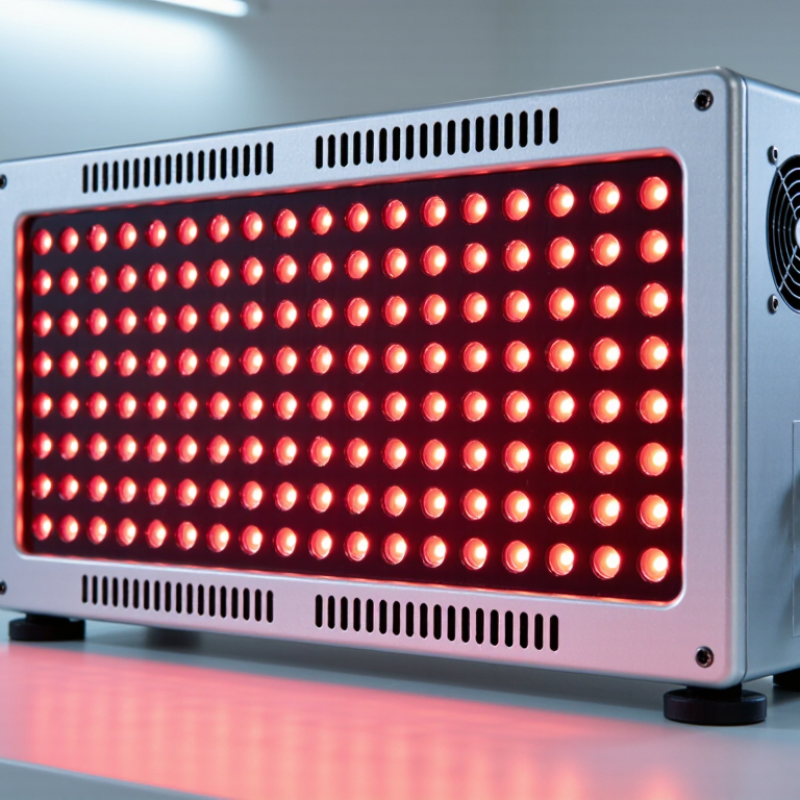
660nm and 850nm Red Light Therapy: Technology and Wavelength Functions
China Best 660nm 850nm Red Light Therapy Manufacturer
660nm and 850nm red light therapy use different wavelength ranges for different exposure goals. The 660nm wavelength is visible red light, reaching more superficial tissue layers. It is commonly selected for skin-focused applications, where even facial coverage and controlled intensity matter. At 850nm, near-infrared light is invisible and generally travels deeper. Designers often use it for muscles, joints, and larger treatment areas. These effects depend on more than wavelength alone.
A reliable device should specify irradiance, treatment distance, exposure time, and beam distribution. For example, a panel delivering 30 mW/cm² at 20 centimeters will not provide the same dose at 60 centimeters. LED spacing also affects coverage. Brightness can mislead. A panel may appear powerful while producing uneven output across the treatment surface. Practical quality checks should include calibrated light measurements, thermal monitoring, electrical safety testing, and consistent performance across repeated sessions.
The 660nm and 850nm ranges can work together, but combining them does not automatically improve results. User comfort, treatment timing, and target depth still require careful adjustment. Eye protection may be appropriate, especially with intense devices or close-range exposure. Individual responses vary, and laboratory findings do not always translate directly into daily use. Even experienced developers revise settings after testing, because skin sensation, heat, and coverage can differ from early assumptions. Clear instructions and traceable manufacturing records support safer, more dependable use.
Manufacturing Processes and Quality Standards for Red Light Devices
China Best 660nm 850nm Red Light Therapy Manufacturer
Manufacturing Processes and Quality Standards for Red Light Devices
Reliable red light devices begin with controlled component selection. Engineers verify 660nm and 850nm LED bins before assembly. Each batch receives traceable records, including supplier data, test results, and production dates. Aluminum circuit boards help transfer heat from LEDs to the housing. Thermal cameras then identify uneven heating during extended operation.
Optical testing measures irradiance, wavelength accuracy, beam distribution, and operating stability. Instruments must be calibrated and checked regularly. Small differences matter. A device may look bright but deliver inconsistent energy across its treatment area. Electrical safety, electromagnetic compatibility, and applicable market requirements should guide final inspection. Protective covers, timers, ventilation openings, and insulation also require practical testing.
Quality control should continue after production. Samples can undergo repeated power cycles, vibration checks, and temperature testing. Operators inspect solder joints and connectors under magnification. No production line is flawless. A missed measurement or rushed inspection can weaken trust. Manufacturers should record defects honestly, investigate their causes, and improve the process instead of hiding poor results. Clear user instructions and measured performance data support safer, more dependable use.
How to Evaluate a Reliable 660nm and 850nm Therapy Manufacturer
A reliable 660nm and 850nm therapy manufacturer should prove performance, not merely advertise wavelength numbers. Ask for independent spectrometer reports showing peak wavelength, bandwidth, irradiance, and measurement distance. A device rated at 100 mW/cm² may produce far less at 30 centimeters. That difference changes the delivered dose.
Technical controls matter. The manufacturer should provide electrical and photobiological safety testing under IEC 62471, plus thermal test records for continuous operation. ISO 13485 certification can indicate controlled medical-device processes, but it does not prove clinical effectiveness. Check calibration dates, testing laboratories, and batch traceability. The U.S. Department of Energy’s solid-state lighting reports repeatedly identify thermal management and reliability as major LED performance factors. Ignore them, and the red panel may age unevenly.
Look for clear evidence on both 660nm and 850nm channels. Ask whether each channel is tested separately and together. Published data should show uniformity across the treatment surface, not only one bright center point. Grand View Research estimated the global photobiomodulation market at over USD 1 billion in 2023, reflecting growing demand but not automatic product quality. More sales do not equal better engineering. Papers can still mislead. I would request a recent sample, measure irradiance with a calibrated meter, and compare its results against the supplied report. A missing uncertainty range is a warning sign. Verify everything.